Showing posts with label Culture. Show all posts

Thursday, April 21, 2011

THE ECLIPSED SUN


THE ECLIPSED SUN


By Rajat Das Gupta

“The book comprises translation by the author of some Poems / Songs and other works by Rabindranath Tagore (Nobel Laureate of 1913) in Bengali language.”

Read more….

http://www.indoindians.com/index.php?option=com_content&view=section&id=39&Itemid=120

Thursday, June 10, 2010

Lure Of Social Networking

Lure Of Social Networking
N D Batra
THE TIMES OF INDIA
11 June 2010

In the United States and Canada, recruiters invariably do Google search on their prospective candidates and trawl social networking sites such as Facebook, MySpace and LinkedIn to cross-check before they hire anyone. With millions of young people eager to share their spur-of-the-moment opinions, risque photos and outrageous experiences with others including strangers, the danger of compromising one's digital identity, privacy and social reputation and, consequently career prospects, is tremendous.

In a free-floating social network environment, users unfortunately forget that the delete key provides a deceptive and illusory function because someone might have already accessed the information and passed it on to others. Once information goes viral, we cannot recall it a curse of the digital age as many American politicians have been discovering. Or maybe it is a public blessing because now no politician can hide from us. Since the internet has taken up the centre stage in our lives, opting out of it is not an option. Our digital past cannot be undone and can haunt us.

According to a recent report from Pew Internet & American Life Project, 46 per cent online adults in the US have uploaded their profiles in virtual networks, which they keep monitoring and updating. And a majority of adult Americans use search engines to find information about themselves no, it's not digital narcissism but a modern-day necessity because maintaining one's reputation and privacy has become difficult in the age of social networks. How ironic that you have to keep checking yourself online to know who you are!

More than older people, it is the younger generations, the 18-29 career-making age group, according to the report, that are keen to limit their personal information available online; they change their private settings, delete unwanted comments and remove their names from any photos tagged to identify them. There is a growing distrust of social networking sites, in spite of the fact that their use is increasing everyday. Since most cameras now come with instant YouTubing capabilities, one gets paranoid seeing a person clicking in public places.

The Pew Centre reported that nowadays most Americans do thorough online search about an expert whose professional services they seek. And this is certainly true about doctors, surgeons and financial experts, people so important to us today. Dating partners do online research about each other before they get into deeper waters. Even neighbours do digital social network snooping on neighbours.

A few days ago a Facebook friend of a friend in India posted a dreadful hate cartoon about a most revered prophet, which i had to delete promptly, not out of fear but out of sheer disgust. Earlier, someone had posted on my Wall a picture of an armed Maoist group, mostly gun-slinging women with children, which drew lot of comments from the friendly strangers on my Facebook. India's Facebook population at about eight million is tiny in comparison with 112 million in the US, but it is growing at a double-digit rate. And the potential is immense, especially when Indian cellphone users, 500 million and growing, the second largest after China, leapfrog fixed-line internet connections and begin to use mobile Web for social networking via the cellphone. It's hard to say how much openness Indians can stand once the country becomes one giant digital fish bowl but the lure of social networking is irresistible.

Today, a man is known by the company he avoids rather than that which he keeps, but in the digital age barriers are so low that sometimes it is difficult to know who is entering your cyberspace. Friends recommend friends and, sooner than you realise, you have a hyperactive communal space where everyone is buzzing and posting something: from a new mom about how her lovely one-year-old warrior is growing so fast, to the most recent conspiracy theory about the railway accident that was engineered to malign the good woman of Kolkata, the redoubtable Mamata Banerjee.

I had to reset my Facebook privacy settings to restrict entrance but i am still not sure how secure the firewall is. Facebook voraciously collects personal information which it utilises for profiling users to enable advertisers to target them more productively. Facebook makes money out of our digital footprints. Under severe public protests, Facebook promised better privacy protection but few trust the network. Nonetheless, its 450 million users worldwide keep socialising perhaps because the benefits of serendipity outweigh the risks.

Online serendipity indeed can be a blessing. For example, sometime ago a Kolkata writer friend, a translator of Tagore's poems and songs, sent me a piece which i published on my website more like a message in a bottle than for distribution. But to my great delight the piece was picked up by the Bulletin of the Ramakrishna Mission Institute of Culture, as part of the 150th anniversary celebration of the poet's birthday. Nothing is lost once it is in cyberspace and an obscure piece in a blog or social network can reach a universal audience.

The writer teaches communications and diplomacy at Norwich University, US.

Thursday, March 18, 2010

Ode to Singapore

Printed from
The Times of India
Some Creative Messiness, Please
N D Batra, Mar 19, 2010, 12.00am IST

Singapore is an obsessively orderly and tidy society. You begin to feel the difference as soon as you disembark at the Changi airport and smoothly glide through Immigration for a taxi that zips through the city under unobtrusive and ubiquitous security cams. If there is an accident five miles ahead of you, i have been told, you would be alerted. The city knows who is doing what; nonetheless, it gives you a genuine feeling of openness, safety and comfort, if you follow the rules. Law enforcement is another obsession here.
A Malaysian-Indian family who recently moved to Singapore told me that this is the safest place for women. In many ways, the measure of a civilised society is how safe its women, whether in hijab, sari or miniskirt, feel when they use public transportation, taxis or walk its city streets at night.

Singapore is perhaps the only country in the world that has banned chewing gums, whose discarded messy blobs are a disgusting public nuisance. Since the unintended and terrible consequences of the 1920-33 prohibition experiment, it is unthinkable that Americans would ever accept this kind of draconian law. But Singapore is different. Unsocial behaviour (chewing gums, spiting paan, etc) and unruly people that disturb social harmony and tarnish the Singapore brand are unacceptable. If it could, the city-state would like to get rid of foreign workers from South and South East Asia, whose nasty social habits, drunkenness, littering, spitting, loud music and public urination are intolerable to Singaporeans.
Many Singaporeans shun the lowly work that foreign workers do and look down upon them from their highrise air-conditioned homes. So auxiliary police officers (APO) patrol areas where foreign workers live and congregate - areas such as Little India, the Golden Mile Complex and other places - in spite of the fact that there is no evidence that foreign workers commit more crimes than local Singaporeans. The arrest rate, according to police figures for 2007, for foreign work-permit holders, was 227 per 100,000 as against 435 for Singaporeans; nonetheless, the country's largest newspaper recommended that "labour contractors and employers make it a contractual duty to brief guest workers thoroughly on the dos and don'ts of life in a tidy society".
Foreign workers in construction, manufacturing and service industries are vital to the Singapore economy, and there are 856,000 of them out of a total foreign population of 1.25 million. But the new budget being discussed now in parliament would impose a progressive levy on companies hiring foreign workers, hoping that hiring restrictions would motivate companies to automate and innovate, thus, increasing productivity.
Higher productivity would require fewer unskilled foreign workers and more highly skilled Singaporean workers. It is doubtful Singapore will ever be able to do without foreign workers, whether high-skilled professionals or low-level construction and domestic workers.
For many Singaporeans, 1.25 million foreigners are too many but the trouble is that Singaporeans are not making enough babies. The fertility rate is one of the lowest in the world. Educated Singaporean women are career-oriented; and, besides, they are professionally extremely competitive with male workers. What makes child-rearing so difficult in Singapore is the paucity of infant care for which the going rate is, in Singapore dollars, $1,000 to $1,500 per month for two to 18 months toddlers. The government gives $600 to full-time working mothers. Some expectant mothers reserve a seat in an infant care facility as early as two months into the pregnancy. The most impressive achievement of Singapore is the mutual acceptance - not merely tolerance - of each other among its various ethnic and religious groups.
Commenting on inter-religious harmony, senior minister Goh Chok said, "Singaporeans are also blessed because many religious organisations reach out to (the) larger community, not just cater to their own flock." The self-congratulation was prompted by the decision of the Ramakrishna Mission to offer 60 parking spaces to Bartley Christian Church worshipper next door for their Sunday services for which the mission built a special gate on its compound. Inter-religious and inter-ethnic recriminations are almost absent.
Recently when a pastor criticised Buddhism and Taoism, whose practices are followed by most ethnic Chinese constituting Singapore's overwhelming majority, his remarks were regarded as socially unacceptable. Singapore politicians, city planners, architects, educators and think-tankers aspire to make the city a hi-tech global hub of trade and commerce that competes with Tokyo, Hong Kong and Shanghai, a goal that is not difficult to achieve.
But to become a great centre for the arts and culture, like New York or London, Singapore needs unbridled freedom of speech and expression, and some tolerance for the creative messiness that accompanies it. It is freedom of speech in all its manifestations that enables a nation to generate an abiding grand narrative or a myth that binds its people. Today Singapore is a very neat, prosperous and liveable city. It is free from civic violence but its civic life is dull. The city-state has no great heroes. It has no grand story to tell the world.
(The writer is professor, communication and diplomacy, Norwich University, US.)

Friday, February 19, 2010

Atlas Must Not Shrug

9 February 2010
The Statesman

The American fantasyMr Obama And The Dream Of Exceptionalism
By
ND Batra

THE hope that Barack Obama the presidential candidate raised in the hearts and minds of his ardent supporters, who saw in him a redeemer like Abraham Lincoln, has begun to fade.
Mr Obama has turned out to be more like Cardinal Barberini in Bertolt Brecht’s play Life of Galileo, who unlike the Church would not “set myself up against the multiplication tables” and “the physical facts.” And when he is elected to become the Pope, he raises hope not only in Galileo, but the whole scientific community. But as Barberini gets ready to make a public appearance, and gracefully assumes the vestments of the Pope, he acquiesces in the demands of the Inquisitor. Barberini, the Pope, embraced the Church fantasy of the earth-centric heavenly order as Mr Obama, the President, has embraced the Bush rhetorical fantasy of saving the Homeland from evil doers. There is little difference between Mr Bush’s determination to break the “the axis of evil” and what Mr Obama said during his Nobel Peace Award acceptance speech, “Evil does exist in the world. A non-violent movement could not have halted Hitler’s armies. Negotiations cannot convince Al Qaida’s leaders to lay down their arms. To say that force is sometimes necessary is not a call to cynicism -- it is a recognition of history, the imperfections of man and the limits of reason.”

Mr. Bush would have been equally comfortable with these words. As Galileo was let down by his hero Barberini, many Americans must be feeling let down by Mr. Obama, who has now become part of the system that must fight evil.

The governing mythsGREAT historical crisis have to be mythologized in order to make them and their resolution acceptable to people in a “morally significant way.” The persuasive power of the overarching and governing myths, the meta narratives, like the Virgin Land, Ground Zero and Homeland, comes from their ability “to produce and conserve national traditions”. Therefore, they “function as unacknowledged legislators that regulate people’s thought and behaviour” says Donald E. Pease, a distinguished literary scholar and social critic at Dartmouth College in his thought-provoking book, The New American Exceptionalism.

The myths of the Virgin Land, the Wild West, the New Frontier, and American Exceptionalism, reverberate throughout American history, giving rationale and moral significance to the domestication of Native Americans into reservations, as well as nation building at home and abroad, says Mr. Pease. “The Virgin Land” stands for an America that is an “open national landscape that fostered the construction and realization of self-reliant individualists,” a fundamental bonding fantasy that melded the people with their land. Divisiveness is natural to humans. The sudden end of the Cold War and the consequent disappearance of the “Other,” the Soviet Union from American consciousness exposed a terrifying geo-political faultline in American society, which though not visible during the George HW Bush administration due to Operation Desert Storm, subsequently found a strong expression in two contesting visions: Newt Gingrich’s Contract with America enclosing the red states and Bill Clinton’s multicultural New Covenant, covering the blue states.

The government’s mishandling of the fundamentalist Branch Davidian church at Waco in 1993 and two years later the Oklahoma City bombing exposed a nation violently divided against itself. The traumatic events of 9/11 closed the faultline in the nation’s geopolitical psyche and provided the state with an opportunity to mythologize the World Trade Center site as “Ground Zero,’ a thumbnail glimpse of Hiroshima, what the “Other” might have done to America if it had WMD. “The Shock and Awe” was a brutal response to the attack on the Americans’ self-image of being an exceptional people, people of the Virgin Land. The horrific event restored to the American people their meta-narrative as a “collectively shared state fantasy,” which united them once again, as they had been during the Cold War. The Bush-generated state fantasy of protecting the Homeland by waging a global war on terrorism nullified the Clinton-Gingrich divisive fantasies and reunited America, but transformed the nation from citizenry into a domestic protectorate, much like what Supreme Court Justice John Marshall in 1830 had done to Native Americans’ homelands. In order to fight the enemy who wanted to destroy the fantasy of American Exceptionalism, Mr Bush ushered in emergency rules by enacting the US Patriot Act that suspended the rule of law and abridged freedom, the very rule of law to protect which he wanted to fight the enemy in the first place. Re-conceptualizing Guantanamo Bay as a foreign country enabled the Bush administration to put it outside the jurisdiction of US courts, thus, turning the inmates into “unlawful enemy combatants,” beyond the protection of the Geneva Conventions. By creating such “master fictions,” the administration succeeded in engineering public consent, thereby making the American people complicit in the state’s violation of the rule of law, according to Mr. Pease.

By expropriating “We the people” into Homeland Security State, it also deprived the people of their right to citizenship. But how the administration’s fantasy work or propaganda succeeded in doping the tri-part structure of co-equals in power and the news media for so long is not explained. The news media nonetheless asserted its freedom on 28 April 2004 when “60 Minutes” broadcast the horrific pictures of Abu Ghraib prisoners that shocked the world. Americans learned that they were repeating the acts of violence that had been committed against the slaves as if the past they had been trying to disavow had suddenly surged up through the subconscious terrain. The hatred and cruelty never went away, it seemed. “Man on the box” looked a figure of sacrifice as well as a slave being lynched. “The images mobilized opposition to the occupation in the name of Abu Ghraib prisoners who had been victimized by this oppression,” says Mr. Pease. Abu Ghraib was a turning point in American consciousness. Exceptional people do not do such things. The war against terrorism was being fought through culturally degrading images.

Shame and sorrow
ALTHOUGH “the pictures of these repugnant forms of violence” created a deep sense of shame and sorrow amounting to compassion, the support for war would continue, argues Mr. Pease, “as long as US public remains captivated by the spectacles of violence the state had erected at the site of Ground Zero.” And Mr. Pease issues a prescient warning: “If US enemies were so “barbaric” that they would not surrender even in the face of these acts of degradation, US troops were in it for a long haul.” Such has been the hold of the Homeland-the Virgin Land on the people’s imagination that they went on supporting the war until they heard the heart-wrenching cry of Cindy Sheen, the mother who lost her son in the war but refused to accept the war in Iraq that “redefined maternity as sacrifice for the cause of nation.” Support for the war had been declining. How much it was due to Cindy Sheen, whom Mr. Pease compares with Sophocles’ Antigone, it is difficult to say; but along with Abu Ghraib and the non-existence of WMD, the Bush-created rhetorical fantasy had begun to dissipate. “The order to come,” Mr. Pease says, “will not begin until the global state of emergency is itself exposed as the cause of the traumas it purports to oppose.” But that would still leave us with Af-Pak and Yemen; North Korea and Iran. Some would strongly disagree but the fantasy of American exceptionalism, which Mr. Obama has embraced ~ “the American dream, the perfectible Union, and the land of promise “ ~ needs a fourth grand theme: America ~ like Atlas ~ must accept the responsibility of “having the weight of the world on his shoulders.” Otherwise who will take care of poor Haiti? Atlas must not shrug.

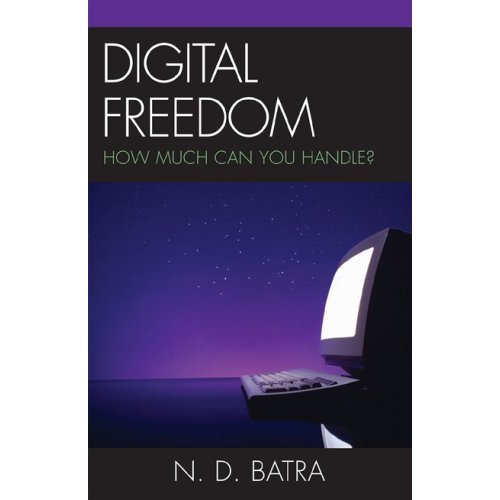
(The writer is the author of Digital Freedom. He teaches communication and diplomacy at Norwich University)

Tuesday, March 24, 2009

China, US, India

Battle of ideas shall continue

CYBER AGE - ND BATRA
From The Statesman

Before the global financial meltdown began last September, the whole world watched with fascination the unstoppable rise of China as a model of economic progress. China as a global workshop ~ that exports, exports, and exports ~ became an exemplar of the energy born of nationalistic commercialism.

Except for those pesky Tibetans and their conniving agents abroad, it looked China had become a global brand with a single dominant story of harmony and peaceful rise. But now because these bankrupt Americans and Europeans are not buying much, many factory sites in China look like a vast wasteland. The euphoria of Asian values and uniqueness is no longer visible. China of course is not crumbling like a cookie but it is also not speeding like a shining silver bullet train.
China as an idea has to compete with others in the international marketplace of ideas. So you can never say that the battle of ideas has been finally won. For example, we did not realise that the end the Soviet Union was not the end of the battle of ideas but rather the beginning of new ones. Think of history as a dynamic landscape where the battle of ideas continues.

Some people, especially those trained in propaganda believe that all that a country needs is a new image and therefore it must re-brand itself. It is not that easy. Even a most authoritarian nation cannot control the message and its image even though it may be the sole source of information about itself. Of course you can never control the image of an open society because there are so many independent actors, institutions and corporations competing for attention.

For example, the Slumdog Millionaire image of India can never be done away. When some of my colleagues ask me as to how accurate is the portrayal of India in the movie, I say it’s a beautiful and accurate “misrepresentation” of India. But Mumbai slumgdogs are better than Mother Teresa’s hopeless downtrodden. Add to this tapestry, the millions of Indians who are using their mobile phones to become entrepreneurs; and the Tata Nano; and the rise of silicon whiz kids in Bangalore, Hyderabad, Gurgaon, Kolkata, et al, and you have a throbbing compelling image of India.

Similarly, Hollywood, IBM, Google, Microsoft, Wal-Mart and all others contribute to the US image abroad. But now you add to this mélange the financial meltdown, increasing joblessness, and the bloody news from Afghanistan! The US image abroad is the materialisation of what the USA is doing at home and abroad.

Foreigners who see only Hollywood violent movies and video games are likely to have a distorted image of the USA. But if you bring them to university campuses, cultural centres, and workplaces, you would see the image of the USA in their minds change radically. Keeping the dynamic nature of the emergent image, it should not be difficult to understand why the public perception of the USA differs from one country to another. The image depends upon the quality and the extent of its presence and its usefulness to the host country.

Even the smartest public diplomacy campaign won’t change perceptions overnight especially when America is deeply engaged in multiple missions abroad. Events might occur beyond its control, which could further blur the image in some countries. China’s presence in the USA is huge but poor quality China-made toys, tainted pet foods and defective tyres have shattered its image of a reliable manufacturer. No amount of public relations or threat of going to WTO as it recently tried to do with India over toys would help China unless it realises that good products are manufactured by countries where the Press is free, where there is political and corporate transparency.

The always-on 24-hour global communication, blogs, instant messaging, and news cycles, make it impossible for practitioners of public relations to devise a central strategy to impose a message control, as it can be done in advertising campaigns for a product or a political candidate. In an environment of unbridled communication, you might still control the message, but you cannot control the meaning when instant alternative interpretations are available.

Each nation is different, so what works in Indonesia may not work in Pakistan. The challenge is to find the right vehicle to carry the message for a specific local audience. Public diplomats must use local leaders to champion and advance their cause and they should do so in such a manner that it makes the local people feel good while at the same time generating goodwill towards the country that is using information culture to foster goodwill. Hollywood is still the best cultural export, but US popular culture, due to proliferation of senseless violence and explicit sex, creates negative impressions in foreign audiences, in spite of the fact the world has been spending billions of dollars importing American entertainment.

The paradox is that in spite of negative feelings about American popular culture that it depicts profanity, nudity, mayhem and crime, the popularity of mass culture, even in the Islamic world, remains strong. In countries like India and the USA, corporations, educational institutions, and non-profits organisations represent most precious values such as individual initiative, innovativeness, entrepreneurship, freedom of speech, and competition. Google and Apple, for example, embody as much of what America stands for as does Hollywood.

India’s massive general election starting 16 April in which an electorate of 714 million would participate makes the idea of India very persuasive and appealing. I would rather have free and fair elections in India than a glamorous summer Olympics.

(ND Batra blogs at http://globaldiplomat.blogspot.com and teaches communications at Norwich University.)

Tuesday, February 10, 2009

Internet Rumors

Working in a world of Internet rumours

From The Statesman
ND Batra
The Internet has enhanced the global supply chain of knowledge, research and education, fuelled global business, and speeded up the flow of capital to places where it is needed. It has also given us alternative sources of news, along with gossips and rumours.

Sometime information, genuine and fake, gets mixed up and creates tremendous problems, especially when it is focused on a specific target, whether it is a politician, educational institution or business. Fighting rumours on the Internet is absolutely necessary because if they get out of control they can damage an individual or corporation’s reputation. Regardless of all the fact checking and corrigendum provided, what matters the most in people’s minds is perception.

Perception is reality. Reputation is based on perception. During the presidential election, for example, according to a nationwide survey, 90 percent Americans heard the rumour that Barack Obama was a Muslim and in spite of repeated denials, 22 percent people persisted in believing that he was a Muslim. But the Obama Internet-savvy gargantuan election machine squelched every rumour about him being a Muslim and his wife Michelle having uttered racial epithets like “whiteys” in a church. Mr Obama emerged as a great communicator, which contributed to his winning the White House.

Mr Obama’s presidential opponent Senator John McCain and his running mate Alaska Governor Sara Palins too were victims of malicious Internet rumors, which did not hurt them; they were able to manage them successfully. Because of their ability to reach people directly through television commercials and access to the news media, most politicians can set their records straight and silence or even kill rumors. Some of them learn to live with low-level rumors and continue working.

But corporations, like Caesar’s wife, must be above suspicion all the time. Today the corporate global works in a 24-hour media environment that includes, apart from the traditional news media, citizen journalists who twitter and blog ceaselessly without any fact-checking and editorial gatekeeping. In fact professional journalists whose reputation depends upon accuracy listen to the daily buzz of citizen journalists. The situation is very complicated for businesses because they don’t know how to respond to millions of voices of the ever proliferating new media formats.

Instead of submitting to the headless monster, the challenge is how a corporation can turn new media into its advantage. What should be a corporation’s strategy in dealing with the rise of new decentralized unfiltered media protected by freedom of the press? Last month McDonald’s issued an unusual statement to nip a rumor floating on the Internet that the company was linked with the Israeli war against Hamas in Gaza. It was meant to hurt the company in Arab and Muslim countries and therefore it became a matter of urgency to issue a firm denial: “McDonald’s donating profits to the war in Israel… These rumours are absolutely false. McDonald’s never has and never will support war efforts in any area of the world through sales and profits in our restaurants.” Ignoring the threat of this rumour would have been disastrous for the company.

About the same time last month there was an anti-Israel demonstration in London that attacked a Starbucks store simply because its CEO Howard Schultz is Jewish and has been an Israel supporter, for which of course he had received an award sometime ago. The demonstration was triggered by wild rumours on the Intent, including mass e-mails and texting that both Starbucks and McDonalds “are donating their next 2 weeks of earned revenue to Israel.” It urged people to “boycott them and forward this message immediately.” Because the company took prompt steps, the rumor did not harm the company at least in terms of marketing. In 2003 the Starbucks rumor was the other way around. An e-mail originated rumor said that Sawbucks Corporation was closing its operation in Israel. The e-mail gave no explanation though the message created the impression that the company was joining Arab countries’ sponsored boycott of American businesses in Israel. Starbucks did not ignore the rumor; it started its own tactful campaign to squelch the rumor and explained that closing its business outlets in Israel was purely a business decision, and that the company would return for business when conditions changed.

Like businesses, universities also live on their reparation. Last year Samuel G Freedman, a journalism professor at Columbia University, recounted in The New York Times how the University of Kentucky tried hard to kill a vicious e-mail rumour that the university had dropped a popular course on the Holocaust in order to avoid hurting Muslim sensibilities, which was a blatant lie. But in spite of official denials, press releases and corrective media reports to the contrary, the e-mail rumour kept spreading from individual to individual, Listserv to Listserv, wrote Prof. Freedman.

This was the time when Iran’s President Mahmoud Ahmedinijad had called an international conference denouncing the Holocaust, the mass extermination of Jews by the Nazis, as a figment of imagination, a myth. But of course when University of Kentucky continued teaching the Holocaust course, the rumour died.

Although we love our blogs, YouTube, Twitter, Facebook, MySpace, and other interactive social networking sites, the grey side of new media is the quickened pace of myriad Internet rumours, whistle-blowing, and other negative publicity about local and transnational companies.

Rumours appeal to our worst collective fears about powerful people, institutions or corporations, especially those who wield tremendous influence on our daily lives. As rumours spread, they not only tend to hurt their targets or victims; they as well reveal our mental state as to who we are.

PS: Imagine if someone had started rumours about Satyam before its founder Ramalinga Raju had outed himself as a swindler.

(ND Batra, the author of Digital Freedom, teaches communications and diplomacy at Norwich University)

Wednesday, October 01, 2008

The Sacred and the Profane

Heavenly and earthly seductions

From The Statesman
ND Batra

Is militant Islam creating psychological conditions under which a person’s desires and dreams become compelling needs?

According to psychologist Abraham Maslow, there is a hierarchy of five primal needs that drive human beings to action to seek satisfaction. The motivating needs include physiological, safety, social, esteem and self-actualisation. Maslow said that a person would tend to fulfil his physiological needs for food and shelter first before he sought to satisfy other higher order needs. But experience shows that once the basic needs of food and shelter are satisfied, some people would seek to satisfy other needs simultaneously instead of seeking their satisfaction one after the other in a hierarchical order, as Maslow propounded. In fact the need for self-actualisation, realising one’s potential, summed up best in the slogan “We shall meet in Paradise,” may become so paramount in a person due to indoctrination that he may minimise or even forego other needs. For example, extreme skiers and mountain climbers do forego safety for the sake of their highest need, self-actualisation, doing the impossible, climbing Mount Everest.How advertisement, one of the most widely practised forms of indoctrination through seduction, creates and transforms our desires and wants into compelling needs is a fascinating field of study that should not be ignored by counter-terrorism experts. Just as the culture of consumption has been driving the Chinese people from Mao’s Thoughts to KFC and Pizza Hut (the owner Yum Brands is the biggest restaurant chain in China), the culture of eternal life/ Paradise that Islamic militants, Al- Qaida and its decentralised networked franchises, preach to the Muslim youth, has been driving them to jihad suicide. Both cultures promise fulfillment: here or the hereafter; as did Communism. The subliminal seductions of jihad are no different in the final analysis from what Communism had to offer in the bloody days of Leninism and Maoism; but you know what happened to the Soviet Union and Mao’s China.

Communism could not withstand the onslaughts of free society consumer culture and its endless capacity for self-renewal. Communism collapsed as a dream falsified. So would militant Islam if confronted the same way. In other words, those fighting terrorism must understand that they will not be able to win the battle against terrorism without replacing the promise of afterlife with the promise of gratification and fulfillment that liberal culture offers today. Mass media and advertisement have turned the West, as it is happening in India and China, into a culture of choices, although it wasn’t always so. Beginning with the Penny Press in the early part of the nineteenth century and later on through yellow journalism of Randolph Hearst, American news media began to depend increasingly on advertisement revenues.

Business and industry needed advertising to reach the masses in order to increase sales. Thus began the symbiotic relations among the three ~ the media, advertising and industry ~ to create the mythical American consumer whose desires must be measured and valued and be transformed into compelling needs. By turning malls into places of work, leisure and pleasure, marketers and advertisers have been transforming shopping into an enjoyable experience. Shop until you shop again, leaves little time for any thought for the afterlife. In the next few weeks India will be celebrating Diwali, which, like Christmas in the West, is gradually becoming a secular marketing experience and a major driving force for the economy. And Id-ul-Fitr festivities are going the same way, blending the sacred and the secular. Just look at Dubai.

By bringing consumers into a desirable media mix, by segmenting population into demographics and psychographics and by demanding media companies to create cultural programmes that not only support commercial products but also create a cascade of gripping needs, advertisers have created a culture of desire that makes people work harder so that they can buy and consume more. Every year, for example, the auto industry comes up with new models with varied psychological appeals and lucrative incentives for the consumer to get rid of his old car even if it is in a good condition and go for a newer model.

In the United States, advertising industry created “soccer and hockey moms” and told them that they needed a van to chauffer their children from school to the ballpark. Until the oil crunch, admen had made SUVs a vehicle of choice for many Americans. After 9/11, auto-manufacturers saw the consumer need for greater security and SUVs gave a feeling of strength and power like armoured vehicles. So even if everything goes well with Tata’s Nano, how long will the Indian consumer with rising income be satisfied with the four-wheel itsy-bitsy contraption? Advertisement is nothing but using all the available means of persuasion, to paraphrase Aristotle. Advertisers have been using target marketing to reach and persuade their audiences effectively. Similarly, instead of looking at the Muslim population of a country as a monolithic mass, it should be segmented demographically for specific messages. For example, the message for a Muslim woman with her overpowering needs for family and children has to be different from what is aimed at the youth.

No Muslim woman wants her son to be blown to pieces in a suicide mission so that he could go to Paradise.

Ultimately militant Islam like Communism would wither away by the seductions of consumer society with its promise of happiness in a world of here and now rather than the false glory of Paradise that jihad promises through press-button sudden death experience. It is going to be a long hard struggle, but the battle must be fought in the battlefield of ideas, desires, wants and needs. The news media and satellite networks that do not hesitate to broadcast messages from Islamic militants would have no problem, if paid well, for airing captivating commercials that persuade Muslims to reach for their wallets rather than explode remote-controlled bombs.Earthly seductions would ultimately win over the destructive culture of the myth of afterlife.

(ND Batra is professor of communications at Norwich University)

Tuesday, May 20, 2008

Homophobia is global

Gay unions: Time to take a stand

From The Statesman
ND Batra

This is an election year and no politician who seeks public office can escape the question of gay marriage. President George W Bush has said unequivocally that marriage is between a man and a woman, but he is not running for office.

The Democrat presidential candidates, Ms Hillary Clinton and Mr Barack Obama, as well as the presumptive Republican presidential nominee, Mr John McCain, are opposed to recognising gay marriage, though they favour civil unions. Nonetheless, they cannot ignore what the California Supreme Court ruled on 15 May.

Writing for a 4-3 majority, Chief Justice Ronald M George said: “In view of the substance and significance of the fundamental constitutional right to form a family relationship, the California Constitution properly must be interpreted to guarantee this basic civil right to all Californians, whether gay or heterosexual, and to same-sex couples as well as to opposite-sex couples.”

The decision overturned California’s 1997 law (which was reaffirmed by the Californians’ 2000 statewide ballot initiative) banning same-sex marriage.California, of course, has bestowed the same rights and obligation on civil unions of same-sex couples as on traditional heterosexual married couples. The court majority, nonetheless, said that although couples bonded in a civil union or a traditional marriage have the same legal rights and obligations, the use of separate terminology for gay people and heterosexuals to establish a family was discriminatory and violated the constitutional right of equal protection.

Semantics can create psychological segregation.

The California Supreme Court drew inspiration from a 1948 inter-racial marriage case in which the court had ruled that the law banning inter-racial marriage was unconstitutional under the equal protection clause of the Fourteenth Amendment. “The right to marry represents the right of an individual to establish a legally recognized family with a person of one’s choice and, as such, is of fundamental significance both to society and to the individual,” Mr George wrote for the majority.

If the will of the people overwhelmingly expressed in popular ballot initiatives or legislative actions imposed a ban on same-sex marriage as it did on inter-racial marriages, it violated people’s fundamental right to form a family of choice.

Neither the will of the people nor tradition could supersede the Constitution. Democracy was much more than a government of the people, by the people, and for the people. The will of the people can be become tyranny.

Homophobia is a global phenomenon.

In the face of scientific evidence, most Americans consider homosexuality to be a cultivated lifestyle and fondly hope that one can be weaned away or de-programmed out of it. Every year schools witness fierce battles between parents and teachers as to what kind of books children should read, which sometime instigates the banning of books related to homosexuality.

Homophobia has led to violence and the killing of innocents.

In 2006, when the Massachusetts Supreme Judicial Court affirmed its earlier decision that gay people had the legal right to marry, some people were jubilant, while others went crazy. It sounded like the beginning of a cultural war.

Nothing has divided the American people so painfully since the question of slavery as the issue of what to do with gay people and lesbians, who have been outing themselves in hordes and getting their faces in everywhere ~ in television sitcoms, school textbooks, magazines covers, dance floors and legislatures.

Soon after the court decision, stand-up comedian and talk-show hostess Ellen DeGeneres announced on her show that she was planning to get married to her long-time girlfriend, actress Portia de Rossi. The audience cheered her lustily.

Although Americans by and large oppose gay marriages, they are inclined to accept civil unions for same-sex couples that would grant them the same rights as heterosexuals have.

Vermont was the first state to recognise civil unions for same-sex couples but only after the state’s highest court ruled that gay people were being deprived of constitutionally guaranteed equal rights and enjoined the state legislature to eliminate this discrimination. The Vermont court did not rule on marriage, rather it ruled on equal rights for all citizens, which included healthcare benefits, inheritance and other rights that go with marriage.

The Massachusetts Supreme Judicial Court went to the extreme and challenged the very definition of marriage. If marriage is essentially a union of hearts, a commitment between two people ~ Evelyn and Madeleine, Ivan and Isaac ~ the concomitant rights and obligation of such a commitment must be respected.

But that’s not what the Bible or Koran says. That’s what the interpreters of the Constitution say.

It is only in Hollywood movies and mass media that you see the US as a homogeneous country. In reality, it has always been a house divided, which is its primary source of its dynamism and creativity.

Adding to the confusion, several states have passed laws that recognise only heterosexual marriages. So what would happen to a Californian gay married couple, let’s say with adopted children, when the family moves to a non-gay marriage state like Alabama?

The Californian Supreme Court seems to be saying that the state should choose a common nomenclature that captures the essence of both traditional marriage and civil union, so that gay people do not feel segregated or discriminated against. Maybe it is time to get rid of the ideologically and emotionally loaded words husband, wife and marriage and replace with them with spouse and domestic partnership.The final word on the meaning of marriage of course lies with the US Supreme Court, the ultimate arbiter.

(ND Batra is professor of communications at Norwich University)

Tuesday, April 29, 2008

Who is looking after your children?


Let’s talk about little children

From The Statesman
ND Batra
Long before children in the US enter school, they have already been exposed to thousands of hours of television shows including commercials. Seventy per cent of day-care centres use television, according to KidsHealth, a website giving medical information for parents. In fact, children spend more time in front of the idiot box than in school.Several studies have shown that excessive television watching unaccompanied by parental supervision causes not only violent behaviour but obesity. Why obesity? Because children become couch potatoes, especially those from the middle class who are likely to keep snacking and drinking sodas. Obesity leads to type 2 childhood diabetes, according the National Institute of Health.Worse still, a study published in the journal of the American Academy of Pediatrics said that excessive early exposure to television increases the risk of attention disorder in children. Children’s brains undergo rapid development in the early years and exposure to television might interfere in the natural process of neural wiring.

Research at Children’s Hospital and Regional Medical Center at the University of Washington, led by Dr Dimitri Christakis, concluded that for every hour of television viewing by children in the 1-3 age group, the risk of attention disorder increased by 9 per cent. The research didn’t mention what kind of content caused attention disorder, however.

Perhaps some programmes for pre-schoolers may have a more salutary effect than animated shows.Before we get panicky, it should be kept in mind that a child having attention disorder doesn’t necessarily suffer from attention deficit hyperactivity disorder (ADHD). ADHD children suffer from a chemical imbalance in the brain. They can’t stay still or control their actions, chatter incessantly, get bored easily, forget things and can’t finish work begun. To some extent, all children show such tendencies; therefore, parents should not jump to hasty conclusions. Attention disorder is a matter of degree. At some point, it becomes a serious illness.

The question is what kinds of television shows cause or aggravate the condition. Or could some shows reverse attention disorder?While the University of Washington study concluded that indiscriminate early exposure might skew brain development, a study in the late 1980s showed television had great learning potential for toddlers. The researchers found that toddlers as young as 10 months can learn when they watch television.

The right kind of shows promote intellectual development and can help children acquire language skills , such as matching names to the objects, and do things by watching them being done on television. The research on language acquisition done on infants by psychologist Mabel Rice of the University of Kansas indicated it was as possible for children to learn from television as from a book if programmes were designed for learning. Unfortunately, they aren’t.To be sure, fast-paced Saturday morning children’s shows that are nothing but marketing ploys for toys and sugary cereals are not going to help children. All they will do is turn them into consumers in the multibillion-dollar toy and cereal marketplace.

But how do we explain the apparent contradiction between Dr Christakis’s research that television may cause attention disorder and Dr Rice’s that it has the potential to teach infants? Apparently, it matters what is put into a show, the purpose and the content. Television is an extraordinary pliable tool that can be used for senseless entertainment or for brain development. Children’s television programmes should not be left to the marketplace entirely. Parents and teachers should have the final say.The American Psychological Association (APA) has suggested steps that could be taken to neutralise the undesirable impact of purposeless violence on children. It says watch at least one episode of the show the child watches to know how violent it is; watch together and discuss the show with the child, why the violence happened and how painful it is. Ask the child how the conflict could have been solved without violence; explain how violence in entertainment is not real; and encourage children to watch shows with characters that cooperate and care for each other. APA also suggested making television violence “part of the public health agenda (like smoking and drunken driving) and publicizing its perils and effects”.

Since each television show in the US is rated for violence and sex, and all sets have a show- and channel-blocking device called V-Chip, it is left to parents to protect children from bad television. But a survey shows that parents are not as proactive as expected, partly because of the grinding pressures of daily life. Besides, there is very little choice on television because all shows are made with commercial recipes. Sometimes I feel fundamental freedoms have been overpowered by commercialism.

In this election year, none of the three candidates, neither Democrat contenders Hillary Clinton and Barack Obama nor the Republican nominee John McCain, has seriously talked about children, except occasionally about the lack of universal health insurance.

So far as parents are concerned, there are much weightier issues: flight of jobs and growing insecurity, bleak prospects for retirement, mortgage crises, rising healthcare costs and out of control gasoline and food prices. And how can anyone forget the burden of Iraq, today and tomorrow?

(ND Batra is professor of communications at Norwich University.)

Tuesday, April 22, 2008

The pope, Islam and Tibet

Speaking in two voices: The pope, Islam and Tibet

From The Statesman
ND Batra

Pope Benedict XVI’s visit to the US came at a very critical time. Just before his visit, the American people had witnessed massive global protests about the Olympic torch, which has increasingly become a symbol of Chinese repression against Tibetans and their religious beliefs rather than a celebration of freedom.

The 81-year-old pontiff summed up the crisis of faith in the modern world of unbridled free market capitalism when he asked, “Who can deny that the present moment is a crossroads?” He was admonishing his followers that while the church’s path is known, there is a danger of people taking the road less frequented. In spite of the promises of rising economic prosperity and globalisation, “we see clear signs of a disturbing breakdown in the very foundation” of the social order. American society accepts unmarried couples, unwed mothers, bachelor fathers, same-sex civil unions, multiple sex partners and all kinds conjugal or parental arrangements. Some Americans claim it their religious right to be polygamous. All lifestyles cannot be equally acceptable, according to the church orthodoxy.

The pope asked a meeting of bishops: "Is it consistent to profess our beliefs in church on Sunday and then during the week promote business practices or medical procedures contrary to those beliefs? Is it consistent for practising Catholics to ignore or exploit the poor and the marginalised, to promote sexual behaviour contrary to Catholic moral teaching or to adopt positions that contradict the right to life of every human being from conception to natural death?” His views on abortion and homosexuality appeal to a much wider audience than 67.5 million American Catholics, the largest single religious denomination in the US. Although the pope opposed the Iraq war in 2003, on abortion and homosexuality he has a kindred soul in the White House, where he was treated as a most honoured guest.In spite of the settlement of thousands of cases of sexual abuse of children by Catholic priests, which cost the church $2 billion, the pope’s visit was overshadowed by a haunting sense of shame and embarrassment. But I wondered if he was trying to spread the blame across all of American society when he asked, “What does it mean to speak of child protection when pornography and violence can be viewed in so many homes through media widely available today?” Although he met some people who were sexually abused as children by clerics, there was no profound sense of atonement in his speeches to the American public. It seemed he was trying to do damage control ~ the way a multinational corporation does when it is hit with a scandal ~ and bring the faithful back to the fold.

Throughout his visit, the pontiff talked about protecting individual rights without any reference to the recent bloody events in Tibet. Perhaps the pontiff does not think much of Buddhism, the Dalai Lama or other religions. He has pooh-poohed the idea of ‘relativism’, which means that other religious paths are not as good Catholicism. Last December the scheduled meeting between Pope Benedict and the Dalai Lama was cancelled because China protested that the meeting would “hurt the feelings of the Chinese people”. The Vatican has been trying to restore diplomatic ties with China and assert its supremacy over the Catholic Church there, which of course China won’t accept.

While calling “for a dialogue of the Christian faith with the modern world, and for a dialogue between all cultures and religions”, Pope Benedict uttered unpardonably inflammatory words against Islam, at the University of Regensburg in Bavaria, Germany, in 2005. He quoted Byzantine emperor Manuel II Paleologus, who in an exchange with a Persian scholar said, “Show me just what Muhammad brought that was new, and there you will find things only evil and inhuman, such as his command to spread by the sword the faith he preached.”The pope failed to imagine the reaction such an insulting statement would have caused and later tried to apologise. “I am deeply sorry for the reactions in some countries to a few passages of my address, which were considered offensive to the sensibility of Muslims. These in fact were a quotation from a medieval text, which do not in any way express my personal thought,” he said.

Papal apologists on both sides of the Atlantic did not succeed in assuaging the outraged Muslims.
But what was the pope thinking when he chose a text that did not represent his own or the Catholic Church’s views? When on 19 April 2005, Cardinal Joseph Alois Ratzinger became the pope, he became the defining voice of the Catholic Church. He could not have been unaware of what he was saying.No doubt the pope was trying to warn the global Catholic community about the gulf that separates it from Islam. His views are not very far from those of President George W Bush, who told the National Endowment for Democracy a few years ago that “Islamic terrorist attacks serve a clear and focused ideology, a set of beliefs and goals that are evil, but not insane. Some call this evil Islamic radicalism; others, militant Jihadism; still others, Islamo-fascism.” The Vatican like most of the West does not look at Islam as a humane, gentle and kind religion.

In spite of his ambivalence about other religions and his diplomatic attempts to avoid offending China, the pope in his address to the UN called for outside intervention if a state failed to protect human rights: “If states are unable to guarantee such protection the international community must intervene with the juridical means provided in the United Nations charter and in other international instruments.”

Perhaps the pontiff should put his words into action, meet with the Dalai Lama and condemn Chinese atrocities in Tibet. Would the pontiff dare?

(ND Batra is professor of communications at Norwich University)

Tuesday, April 15, 2008

As security increases, would freedom decline?

From The Statesman
ND Batra

Last Wednesday, the Federal Communications Commission (FCC) approved a plan for a nationwide text messaging system that would alert Americans on their cell phones about terrorist attacks, natural disasters, campus shootings (like the one that occurred in Virginia Tech in 2007), child abductions or a killer on the loose.

The initiative originates from a 2006 federal law, the Warning Alert and Response Network Act (WARN Act) that requires upgrading the national emergency system. Cell phone subscribers won’t be charged for the alert messages they receive from Uncle Sam; nonetheless, they could opt out. Although the wireless industry has endorsed the plan, according to news reports, service providers’ participation is voluntary. Target date for fully implementing the FCC plan is 2010.

Any organisation, private or public, that mass-distributes information instantly can also collect it from its users instantly. Search companies like Google, Yahoo, AOL and others collect and archive huge amounts of personal data from which can be profiled the behaviour of the user. They also cooperate with authoritarian governments as a price for working in their countries, especially when the lure of profits is irresistible.

There are cases of Internet search companies that have inadvertently released from their archives millions of search queries. Even if the names were not released, it would not have been difficult to put together the profile of searcher XYZ, for example, and what was motivating his search. The questions XYZ asks and the searches he makes online or in real life would reveal his mind. Web users everywhere are quietly submitting to whatever brings them a feeling of comfort and certainty. Protests against intrusiveness by the government and businesses into our personal lives have become muted. We are lapsing into a non-obtrusive surveillance society.

Every time there is a terrorist attack text message, we would feel that the government might be right. Online surveillance devices are being increasingly used by businesses to track users when they surf their Websites. Tracking is done inconspicuously and the user can never suspect that he is being watched.

Most of us are familiar with cookies, Web bugs, small software programs the advertisers put on our hard drives to track where we surf so that they can customise the most fitting advertising message for us to achieve target marketing, reaching the right person with right message. But a Web bug can be programmed to collect whatever data is required without the knowledge of the user. When you look at your online financial statement, or a health Website, the digital bug too could be monitoring it. Some companies do inform their visitors about the tracking devices they use and for what purposes. A Web beacon can track whether a particular message, including junk mail, has been opened and acted upon. Any electronic image that is part of a Web page, including a banner ad, can be programmed to act as a beacon and spy on the user.

Companies claim that the information enables them to personalise the surfing experience when a frequent user visits their portal. Users can opt-out, but most of them don’t know whether the option is available; nor do many of them pay attention to the privacy statement. Clandestine observation technologies are not limited to the Net. Several companies are using biometrics, face recognition, radio frequency and global positioning system (GPS) technologies to keep a watch on their properties and track suspects. Many car rental companies in the United States use GPS to keep track of their rental cars. If a car is stolen or is involved in an accident, the company would know the exact location of the car. But can a company withhold information from the police?

Many airports have started using digital fingerprint identification technology to conduct background checks without any protest from employees. Face recognition technology is being extensively used not only in airports but also in ballparks, banks and other business establishments. If a suspect turns up, his face is digitally matched in seconds with the image database. It is not a foolproof system. So far we don’t know how many terrorists have been apprehended by face recognition technology, but the security business is booming in the United States.

The US Customs and some airports are using low-dose X-ray machines, such as Body Search, to electronically scan a person for drugs, bombs and contrabands. Body Search electronically strips a person naked and projects the image on the screen for scrutiny without the person being asked to take her clothes off ~ all in the name of security. Hundreds of air travellers, including women, are randomly subjected to electronic Body Search.

An interesting security tracking technology is the radio-frequency identification tag (RFID), which is attached to a suspect’s baggage as he checks in. The tagged baggage is automatically routed to a security area where it is screened with special cameras and sensors for explosives and other hazardous materials. Depending upon the level danger alert, along with our baggage we too might have to wear radio-frequency ID tags so that we can be monitored as we move from one airport to another, from country to country via GPS. From centralised text messaging on cell phones to radio frequency ID tagging, government and global corporate interests are converging.

Imagine the possibilities ~ good and evil!
What might a democratic country with a base of 300 million cell phones do?
Or think of an authoritarian rising super power texting a message to its captive billions: Beware of the devil in monk’s clothing preaching compassion.

(ND Batra, the author of Digital Freedom, teaches communication and diplomacy at Norwich University)

Wednesday, March 12, 2008

When kids go digitally mobile

Kids of the mobile revolution

ND Batra
The Statesman

Kids of the mobile generation want to be connected with their friends through social networks, MySpace, Facebook, and YouTube, though they may not be always aware of the risks of exposure.

But don’t blame the parents; they just can’t stop worrying that the Internet, like guns and drinking, can be dangerous. Kids do not have the maturity of judgment and self-restraint to prevent accidental injuries to themselves and others. Especially now-a-days when cell phones are becoming multimedia mini-laptops and millions of kids are using them day and night, parents and health and law-enforcement officials are becoming increasingly concerned about cybercrimes against children.

Part of the problem is that parents and teachers cannot keep up with emerging technologies and do not know how kids are using them. It was easier to control the desktop because parents would just hover around to see where kids were surfing; but there is no way that a Web-enabled cell phone can be monitored.

The Internet could cause harm to children, for example, when stalkers and predators prowl chatrooms, assume fake identities and make propositions for romance and sex.

Several surveys have found that majority of teenagers online are contacted by people whom they never met before; and many kids do respond to e-mail and instant messages from strangers. Although some teen recipients do worry about unsolicited messages, most of them don’t care or treat them as a passing nuisance.

Reports after reports have urged parents, teachers and health-care professionals to educate children on how to deal with online sexual solicitations and other hazards of virtual life. Of course, dealing with risks is part of growing up. Just as we watch children on the playground, we should watch them in cyberspace, it is argued, rather than altogether preventing them from venturing into the wonderland of cyberspace.

According to a recent online victimization of youth research report from The National Children for Missing & Exploited Children, “Approximately one in seven youth online (10 to 17-years-old) received a sexual solicitation or approach over the Internet.”

Some online predators pursue their intended victims aggressively by calling them on phone and sending them letters through mail, money and gifts, according to the report. More than one-third of the surveyed children received “an unwanted exposure to sexual material -- pictures of naked people or people having sex.” Some children do inform their guardians or parents but majority of them do not bother, the report said. In response, some parents install software such as Net Nanny, Cybersitter, Safe Eyes or some other filters that are flooding the market.

Kids are normally reluctant to share their passwords for social networking sites, MySpace or Facebook; but a few parents do prevail and watch what their children are doing online. Looking at the rapid growth of mobile technology, the question is not how soon kids should go online because there is no way of stopping them at any age. The education market place, too, is pushing parents to put their children online, lest they be left behind in the digital age.

As Rory Cellan-Jones of BBC recently reported, “Children are at the cutting edge of the mobile internet revolution and both teachers and the phone industry can learn from them….While the teachers here are worried about aspects of mobile phone use such as bullying texts and explicit videos, they are aware that a ban is becoming untenable.” Since parents and teachers can’t stop them, the best way is to re-direct the cell phone use by adding educational value to it, it is suggested. “And they (teachers) are even beginning to explore how mobile phones could be used in lessons – one class was using phones to film simple animations,” said Cellan-Jones.

Although not much research is available at present to assess the impact of computers on educating children, no one wants his or her child to be left behind. Being there, being in cyberspace, is important. In an effort to bridge the digital divide and educational gap, some schools in the United States make available to students’ families a home connection to enable kids to do their homework and allow their parents to be in touch with the teachers.

Occasionally one comes across reports that students who had access to the network did better in mathematics and English scores than those who did not have such an opportunity. There are some educators who believe that letting even four-year old children surf the Internet would blossom their minds. Earlier the better, for which currently there is no hard research data available, but so strong is the passion of parents for their children’s future that even some politicians are ready to support the myth of early blossoming of the mind with their political demagoguery.

For children interactive cartooning and games can be great fun, but certainly not as much as they can have with biking, block building, finger-painting, and playing with mud, or just plain pushing and hustling. There are educators who still believe that the most precious natural gift for children is their imagination.

It is through tactile sensations and make-believes that they explore and make sense of their surroundings. The challenge before child psychologists, educators, health professionals and parents is to find a balance between the real and the virtual, so as to engage children emotionally and imaginatively. Let children grow at their natural pace rather than forcing them to ripen prematurely and create early bloomers.

(ND Batra is Professor of Communications, Norwich University, and is the author of Digital Freedom: How Much Can You Handle?)

Tuesday, February 19, 2008

Googlistan

Building trust in Googlistan

From The Statesman

ND Batra

A recent Pew/Internet report regarding the privacy implications of digital mobility said that many people in the United States “are jumping into the fast, mobile, participatory Web without considering all the implications.”

Of course that is true of other countries too. Just imagine India’s 237 million mobile phone users who keep chirping without any thought of who might be listening to them. As the Pew report stated: “If nothing really bad has happened to someone, they tend neither to worry about their personal information nor to take steps to limit the amount of information that can be found about them online.” But the invisible threat of someone watching and listening is ubiquitous.

The enthusiasm about the Internet among the young and the old all over the world has been increasing steadily. Painful memories of the deflated dotcom era have faded. The digital age is rising again, it would seem, on a foundation of hope, as more and more users begin to realise the Internet’s potential in diverse fields from online teaching to micro-financing to grocery shopping.

The main reason for the growing popularity of the Internet, especially the wireless mobile, is that it makes the users’ lives easier and also creates business possibilities where none existed earlier. Though this is basically an adult view ~ teenagers value the Internet for different reasons ~ the fact remains that its popularity among all sections of society not only in the United States but everywhere else too is multiplying.

The phenomenal rise of Google and the recent Microsoft’s bid to acquisition Yahoo! shows that dotcom companies have not only been growing rapidly but the future is digital and mobile. The users regard the mobile Internet not only as a limitless source of free information available at a click but also a shopping mall, banking street and place to socialise.

Of course, some people still don’t feel confident about trusting the computer screen ~ even if an online store gives free home deliveries; they would rather go to the store, browse and enjoy the sensuous experience of personal shopping.

There is a widely held view that the Internet is a genuine cause of concern regarding privacy, pornography, accuracy of information and accountability. Hopefully as these concerns diminish, the dotcoms would become a pre-eminent engine driving the economy everywhere. The question of accountability is a typical one that the American public normally asks, whether it is regarding a toy manufacturer, pharmaceutical company or a mutual fund company. But since the Internet is not owned by anyone and is impossible to control, the question of accountability becomes intriguing and difficult to handle.

At present very few people feel that there is any online accountability. The American people are worried about the government and private companies collecting information about them when they are online. Data-sniffers do make us vulnerable on the Internet. If in a shopping mall someone watches or stalks you, you become alert and take some action; or maybe you choose to do nothing. On the Internet you don’t know who is watching you and why, which creates a diffused sense of anxiety and consequently reduces trust in the system.

The adult users’ view of the Internet contrasts sharply, in many respects, with what American teenagers think about cyberspace. Teenagers love the Internet’s freedom and anonymity. For them it is a source of empowerment and a zone of unsupervised freedom. Another Pew/Internet December 2007 survey, Teens and Social Media reported that teenagers’ “use of social media ~ from blogging to online social networking to creation of all kinds of digital material ~ is central” to their lives, with girls ahead of boys in the blogosphere.

“Digital images ~ stills and videos ~ have a big role in teen life. Posting them often starts a virtual conversation. Most teens receive some feedback on the content they post online,” the survey reported.

Unlike adults who want the Internet to be regulated somehow, teenagers prefer the Internet to be left alone, lest its freedom be compromised. They are aware of the dangers of meeting strangers and predators online but feel confident of dealing with the situation on their own, a view that also finds expression in other reports about the Internet and teenagers. Teenagers are also not as much concerned about surveillance as are adult users, which seems a little puzzling.

I believe teenagers’ indifferent attitude regarding data mining and profiling is due to the fact that they have very little to lose in material terms, for example, credit card identity theft, financial blackmail, and bad credit.

Fear is a natural emotion and it grows as we grow older. My own students whom I occasionally use as captive focus groups to see which way the social winds are blowing feel that it is the responsibility of the individual or parents, not the government, to supervise the Net. But that does not answer the question about teenagers who come from families where parental supervision is not available.

When the family bonds are not strong and guidance is minimal, how should teenagers deal with the freedom of the Internet, especially with portals like MySpace and Facebook, where kids can do whatever they want, posting personal and private thoughts, and all kinds of pictures? Creating trust in Googlistan is a great corporate challenge.

(ND Batra is professor of communications at Norwich University, Vermont)

Tuesday, February 12, 2008

Digital space to real space

Millennial musings of a non-millenial man

From The Statesman
ND Batra

Our BlackBerrys, the Internet anywhere and wireless global connectivity do give us a sense of freedom but they may also be diminishing face-to-face interactions and engagement from the realities of life. Sometime it takes a natural calamity to bring us back to our sense of humanity.

Last week when most Americans were hooked on Super Tuesday presidential primaries and its aftermath, a cluster of deadly tornados with wind speed 125-150 mph ripped across five states in the US South killing 59 people. Miraculously an 11-month child was saved ~ not by Google Earth but a perceptive human who spotted the child in a mud puddle. And President George W Bush was there too. “I’m here to listen... to make sure that the federal response is compassionate and effective,” Mr Bush said after an aerial tour of the area where he saw first-hand, not on YouTube, homes flattened and fields strewn with trees and animal carcasses.

The identity, cultural values and religious life of a community are anchored in physical space, which MySpace and Facebook cannot replace. But it is true that human bonds, especially of the millennial generation (those born between 1977 and 1994), are loosening. With our cell phones and GPS, perpetual mobility and perpetual connectivity, we are in touch without being in touch.

In this age of virtual presence and transitory relations with disembodied and delocalised groups that rise and disappear in cyberspace, the sense of the place, its physical and cultural intimacy, its diurnal patterns, is becoming very important to people. The feeling of being a New Yorker, the smells and the sounds of the city even in the dead of winter is so desirable. If you live in Kolkata or Mumbai, for example, you know what I mean.

During the grueling presidential primary season, Democrats and Republicans have been going from one state to another on an endless pilgrimage to be with the people, physically connecting with them, touching them, eating with them in local diners, which they could not have done in cyberspace. One of the greatest virtues of democracy is that it churns up society periodically and creates the possibility of renewal through self-examination as it is happening now in the United States as presidential hopefuls, Republicans and Democrats, crisscross the country promising a better America. They love the blessings of borderless cyberspace to raise funds but talk of protecting the borders to stop illegal immigrants who come to seek work while corporate America outsources work to a digital seamless world.

The question is whether the digital age, which gives us the choice to work and collaborate from anywhere, could also revitalise and renew abandoned suburbia, downtowns and slums especially surrounding big cities hit by subprime loan crisis and home foreclosures. Social networks, chat rooms and virtual communities hold the promise of bringing about new social activism in communities and empowering people to demand changes, but so far it has not been happening.

Laws are made to empower citizens to live a life of self-regulated autonomy in accordance with their personal beliefs and values. Can civic responsibility be maintained if one loses a sense of place? Can a civic generation be created in cyberspace? Digital economy tends to make people less committed to their communities.

Closer the world becomes because of globalisation, greater is the need for localism and committed local leaders. Identity that creates bonds becomes crucial. Perhaps that is one of the reasons why Americans are so worried about illegal immigrants, who are so essential to the economy and yet are perceived as a social burden. Americans fear dilution of their identity due to the influx of people from across the border.

Yet a serious question arises as to how a country should make itself desirable enough to keep and lure the elite, when a substantial portion of work becomes mobile and could be done from anywhere in the world. The late management guru Peter Drucker saw the digital economy threatening “a new class conflict between the large minority of knowledge workers and the majority of people who make their living traditionally.”

But you don’t see this happening unless you wonder why Maoists’ insurgency in India continues unabated or why a physician like Amit Kumar is able to persuade poor Indians to sell their kidneys instead of providing them with affordable healthcare. Digital and stock-market millionaires are rising everywhere, in India too.

In spite of digital economy the median family income in the United States has not been going up significantly, while the number of millionaires is galloping. Trickledown economy has been trickling very slowly to the bottom rung of the people. Stock market does not spread wealth, though the number of Americans owning stock directly or through their pension funds has increased substantially. When the top ten per cent own 90 per cent of the stock, market alone cannot provide a cure for poverty.

Migration of jobs from industrial rustbelts to other countries, and the consequent desertion of erstwhile prosperous communities, has been causing pain. Call to reform education, including testing and teachers’ accountability, has been an attempt to halt dislocation when global corporations become increasingly global and mobile and rootless. The need to build a broad-based economy that gives hope to people left behind could have never been more urgent than today. The millennial generation needs to get out of MySpace and YouTube and smell the earth.

(ND Batra is professor of communications at Norwich University, Vermont. He is the author of Digital Freedom: How Much Can You Handle?)

Tuesday, February 05, 2008

Smart campuses sans smart professors

Can a smart campus make its professors smart?

From The Statesman
ND Batra

Today an institute of higher education with graduate and post-graduate research programmes needs a sophisticated environment of virtual learning that allows its students and faculty to access not only its own databases but also global intellectual resources. Some universities such as MIT, Yale, John Hopkins, UC Irvine, and others have made available their courses, including audio-video lectures online, which are open to the public. Through their opencourseware, these universities have established global collaborative relations with other institutions and in the process built up their social capital and enhanced their reputation. MIT offers more than 1,800 courses online and many of its faculty members have become global teachers. Its opencourseware site has received 2.4 million visits since 2004.

US campuses are increasingly becoming broadband and wireless, enabling students to use their laptops or mobile devices from anywhere. Classrooms are getting “smart” in the sense that teachers can connect to Internet sources from their classrooms, besides using other instructional tools. I live very close to Dartmouth College and whenever I visit the campus, I see students using their laptops everywhere. Many professors put up their class notes and other teaching materials online. Online discussions and wikis are becoming common teaching tools.

Making a classroom “smart” and globally available requires the university to have a professional studio/staff to help faculty members to digitise and upload their lectures and other teaching materials online, apart from having enough server space to accommodate requests for access from the general public. It is an expensive undertaking.

At the graduate level, some universities have created virtual campuses that are supplemented with periodic on-campus residencies during which students and faculty members make presentations, hold symposia and seminars. For example, at Norwich University where I am a faculty member, the graduate school uses Blackboard Learning System for its teaching and it is working all right at present. But in the age of Second Life, YouTube and video podcasts, I don’t know how long graduate students will be satisfied with the present method of asynchronous teaching.

As a graduate faculty I would like to virtualise my presence through Second Life and offer Web seminars. Last week I attended a live Webcast seminar (http://w.on24.com/r.htm?e=100367&s=1&k=69ADCF54195868AF1164D05CCF308FF4) presented by Dow Jones, “Latest Trend in Social Media: How to Listen Effectively and Engage in the Conversation,” which in its one-hour presentation included voiceover PowerPoint, graphics, instant participant surveys and question-answers. I thought this might be a wave of the future for virtual teaching. Some universities, for example, Harvard Law School, have begun to offer some of their courses in Second Life.

Of the various instructional methods used for teaching by American professors, the use of computer-aided instruction, especially at the undergraduate level, is limited to PowerPoint or video primarily to break the monotony of a long lecture. PowerPoint gives teachers an illusion of mastery of their subject matters but its excessive use can be a barrier to engaging students in class. Some students resent the technology because it tends to shut them out of live exchange. No one has come up with an equally good alternative to lecture-discussion method that has been at the heart of teaching-learning experience since ages.

Lecturing is done partly to establish intellectual and personal relationship with students even if the same material may be available in the textbook. Sometimes lecturing becomes a necessity, especially when a tough topic and fundamentals have to be explained. When the textbook along with supplementary readings is brought to bear upon a discussion topic in the classroom, you see the beginning of learning, which is further enhanced through projects, term papers, weekly essay assignments, and the stimulus of quizzes, and mid-term and final examinations.

But online teaching is raising some interesting possibilities. While in classroom discussions some students, especially girls, hesitate to participate, I have personally found that most students participate very enthusiastically in online discussions. Many of them express themselves freely when I encourage a free-style discussion, de-emphasising grammar for the time being. Online discussion creates a level playing field between the extrovert and the shy type.

Of course students and professors miss a lot when there are no face-to-face encounters, dramatic moments which occasionally result in witticism, humour and other minor confrontations that enhance teaching and learning and make the dialogue ~ the dialectic ~ such a joy.

Information technology causes stress on the campus, simply because no one can always keep up at the cutting edge of technology. Even younger faculty members who have grown up with the Internet feel stressed due to the fact that information technology is not user-friendly.

Teaching online requires a different attitude because communication between students and teachers is asynchronous. Many adult students find working on their own time a great advantage. But how to get your point across without facial gestures and vocal cues is a challenge. Classroom liveliness and vibrancy, the thrill of being with students is absent online. Lecturing is performance and some of us become teachers because it gives us a sense of participation in the learning process. Physical presence and face-to-face meetings can bring out the best in students. The juice rush that one feels in the class when there is something unexpected, the laughter, the body language and voice inflection, and the instant feedback, including sleeping and yawning, all are absent in the virtual classroom. How to bring one’s personality into the virtual classroom is a serious challenge.

Can a smart university campus make its professors smart? Global exposure can be an incentive for some professors to improve their teaching but the jury is still out whether a smart online presentation is all that what we mean by good teaching. Nevertheless, you can’t disagree with the MIT’s motto “Unlocking Knowledge, Empowering minds,” whatever it takes, virtual or real.

(ND Batra is professor of communications at Norwich University, Vermont)

Tuesday, November 13, 2007

Digital natives collaborating

Digital natives collaborating

From The Statesman

ND Batra

The challenge for the academia lies in tapping and pooling the brainpower within academic units as well as outside and creating an environment of synergy and enthusiasm for collaboration. That is how you develop what is called “swarming intelligence.”

As it has been often said, the digital age is breaking walls and melding previously divergent communities, for example, of critics and practitioners; of message creators and audiences; of teachers and learners. The virtual and the physical are crisscrossing and becoming co-extensive parallel universes.

The Second Life, YouTube, MySpace, and Facebook generation is developing its sensibilities in virtual environments characterised by new assumptions based on heterarchy, interactivity, and intellectual engagement, what MIT’s Henry Jenkins describes as “a culture with relatively low barriers to artistic expression and civic engagement, strong support for creating and sharing one’s creations, and some type of informal mentorship whereby what is known by the most experienced is passed along to novices.”

This kind of heterarchical culture generates “opportunities for peer-to-peer learning, a changed attitude toward intellectual property, the diversification of cultural expression, the development of skills valued in the workplace, and a more empowered conception of citizenship.” The cyber generation that is descending upon campuses requires skills that enable it to be competitive in a global environment where collaborative teamwork, spread across time-zones and continents, is becoming a necessity.

Fortunately, thanks to computer and video games, many kids are already coming to colleges equipped with some of the skills suggested by Jenkins; for example: “the capacity to experiment with one’s surroundings as a form of problem-solving; the ability to adopt alternative identities for the purpose of improvisation and discovery; the ability to interpret and construct dynamic models of real-world processes; the ability to meaningfully sample and remix media content; the ability to scan one’s environment and shift focus as needed to salient details; the ability to interact meaningfully with tools that expand mental capacities; the ability to pool knowledge and compare notes with others toward a common goal; the ability to evaluate the reliability and credibility of different information sources; the ability to follow the flow of stories and information across multiple modalities; the ability to search for, synthesise, and disseminate information; the ability to travel across diverse communities, discerning and respecting multiple perspectives, and grasping and following alternative norms.”
And there is much more to come.
To educate the cyber generation, the campus grey eminence needs to develop tools for collaborative environment in which students and teachers can work as co-workers and performers. For a university an important step in building collaboration for innovation is to develop its own Wiki, where people can collaborate, build, edit, and correct each other. The idea of Wiki is based on the principle of redundancy and the system’s self-correcting behaviour, which makes it possible for knowledge and creativity to emerge through continuous emendation, additions and revisions. Andrew P McAffee calls it (Sloan Management Review) as “The Dawn of Emergent Collaboration.”

Convergence and emergence shape our lives today.

I believe that in an innovation and knowledge-driven world collaboration is imperative, though most of us are obsessed with lone geniuses like Albert Einstein transforming space-time dimensions into abstract mathematical equations; Ludwig van Beethoven composing and conducting the orchestra and chorus in the premiere of his Ninth Symphony that he could not hear; or John Milton, blind and old, dictating Paradise Lost to his daughter. It is not that the proverbial genius will ever vanish; rather the most important point in the age of social networking and collaborative code-making is that academically disparate people now have the means, for example, as mentioned earlier, a constantly evolving digital platform like Wiki, to work together and enhance the creation of knowledge and scholarship.

Consider the novel Click, which was collaboratively created under the editorial oversight of Arthur Levine by ten authors each contributing a chapter to a mystery surrounding “a camera, some photographs and box with seven shells.” The collaboration took place sequentially, each author’s contribution built upon the previous one, story upon story that has hung together as a wholesome plot. But the novel could have been created in Wiki also, probably with better results, tapping into the collective wisdom and interactivity of the group instead of each author waiting for his or her turn to write a chapter.

Collaboration in the arts and humanities is not something new. In televisions, as I mentioned in one of my earlier books, The Hour of Television, creativity is normally negotiated and bargained, where, in fact, the collective is the creator and programs emerge from a generative system rather than as an act of individual creation. Think of "Guiding Light", a programme that originated as a radio soap opera (25 January 1937) and was transferred to television (30 June 1952) and has been continuing since then - an example of generative collaborative creativity across two generations.

From Bollywood to Hollywood, collaboration is of the essence.

In the digital age, poor communication occurs because of structural and bureaucratic potholes and because people who have expertise in one field fail to appreciate new ideas in others and shut them out.

Sometime collaboration fails because it is limited to very few people in partnering academic centres, so if some key expert quits, the network withers away. Redundancy, the basis of decentralised networking, is not only essential for continuous creativity but also acts as an antidote to the arrogance of expert power.
In the digital age, chain of commands is an anathema.
The challenge is how to integrate creative activities and unique knowledge as effectively as global supply chains integrate labour, raw materials, finance, and marketing. In the world of globalised business, creative work flows in loops across people, building on shared brainpower, each knowledge hub validating and adding value to the work done by the other, thus, hastening testing, and shaping up and perfecting the final project that might have begun in Kolkata but ends up in Silicon Valley.

In cyberspace, disciplinary zones need not become impenetrable barriers but in order to turn them into an asset it is necessary to develop a user-friendly IT system that provides reliable and uniform services, which can be adapted to ever increasing complex environment across academic disciplines, divisions, and schools.

The task henceforth is to create a system that is capable of accessing available sources of knowledge and mining all modes of human expression, whether audio, video, pictorial, or textual - a protocol that transcends cultural and disciplinary barriers. IT system should be capable of customizing knowledge as per individual or group needs.
For example, consider Dragon Naturally Speaking, which I have been using to dictate my weekly column for The Statesman and update my blog, CorporatePower. In the beginning, the programme would ask me to read the given text passages over and over again, and as I did, the system began to learn my speech rhythm, cadence and accent (Indian-American), and eventually it adapted itself to my needs. The more I use it, the more it learns and more intelligent it becomes. Dragon Naturally Speaking was not created for people like me but for busy corporate executives. The important point is that systems can be created that listen to us and evolve to meet our scholarly, scientific, humanistic, and artistic needs.

And that is a blessing of the digital age, which digital natives are exploring as they build collaborative platforms across cultures from Bangalore to Boston, from IIT to MIT.

(ND Batra teaches communications and diplomacy at Norwich University. The author of Digital Freedom, he is now working on a new book, This is the American Way.)

Copyright ND Batra 2010