Diplomacy in a fractured world
From The Statesman
ND Batra
Even if it were possible to eliminate Islamic jihadism, some new dangerous ideology would arise to threaten peace and our most cherished ideals of freedom and equality.There would never be a time when we can say that we have won the war of ideas.
It is a perpetual struggle. Ultimately, it is the mind that is the battlefield. You could look at history as progress, like a train going to some destination, leaving the past behind.Or you could imagine history as an uninterrupted landscape, where past, present and future co-exist in dynamic tension. Even if India and Pakistan were to sign a final peace accord over Kashmir, some people would continue blowing up trains.
Some people believe that all that the USA needs is a new image and therefore it must re-brand itself, just as corporations do. That shows poor thinking. To a great extent, a corporation can control its message and its image because it is the sole source of information about itself. But you cannot control the image of an open society because there are so many independent actors, institutions and corporations; for example, Hollywood, Hip-Hop, the US military, corporate America, Anna Nicole Smith, Wal-Mart, Google ~ all of them contribute to the US image abroad.And now add to all this the havoc caused by the horrific images of innocent people being daily blown up in Baghdad; or a Sunni woman going on Al Jazeera television and painfully saying that she was raped by the police, who are mostly Shia.And the US military’s helplessness in doing much about it.
The US image abroad is an “emergence” and its quality depends upon how much of the USA is present in a particular country. A country that is exposed to only Hollywood violent movies and video games is likely to have a distorted image of the USA.But if you add to it the presence of an IBM R&D center, university campus, cultural centre, and Nike factory, you would see how the image of the USA in that country begins to change. Keeping the emergent nature of the image, it should not be difficult to understand why the public image of the USA differs from one country to another.The image depends upon the quality and the extent of its presence and its usefulness to the country.
American corporate presence in India has generated goodwill, which a public opinion poll might miss measuring if it were to pay attention to an occasional demonstration against a global retailer such as Wal-Mart trying to establish a foothold in the marketplace. Even the smartest public diplomacy campaign won’t change perceptions overnight, especially when the USA is engaged in multifarious activities abroad. Events might occur beyond its control, which could further blur the image in some countries. No quick fix crisis communication would help.
The always-on, 24-hour global communication, blogs, instant messaging, chatrooms, and news cycles, make it impossible for practitioners of public diplomacy to devise a central strategy to impose a message discipline, as it can be done in advertising campaigns for a product or a political candidate.Nor is public diplomacy like a political campaign, where negative campaigning could kill an opponent with a devastating effect. In an environment of decentralised communications, you might still control the message, but you cannot control the meaning when instant alternative interpretations, Al Jazeera, for example, are available.
Each nation is different, so what works in Indonesia may not work in Nigeria or Pakistan. The challenge is to find the right vehicle to embody the message for a specific local audience. Al-Qaida uses local clerics to spread its jihadist message. Public diplomacy practitioners must use local leaders to champion and advance their cause and they should do so in such a manner that it makes the local people feel good about their own society, while at the same time generating goodwill towards the USA. There was a time when Hollywood was the best cultural export, but now many people believe that US popular culture, due to proliferation of senseless violence and explicit sex, creates negative impressions in foreign audiences, despite the fact that the world has been spending billions of dollars importing American entertainment, filmed and taped programmes, as well as box-office hits.The global popularity of Oscar remains unparalleled.
The paradox is that in spite of negative feelings about American popular culture that it depicts profanity, nudity, mayhem and crime, its allure remains unabated even in the Muslim world.In any case, public diplomats, who want to win over the hearts and minds of the people, should not count upon Hollywood’s popular culture as the nation’s goodwill ambassador. Nor should India count upon Bollywood.
US corporations, educational institutions, and non-profit organisations represent some of the most precious American values, such as individual initiative, innovativeness, entrepreneurship, freedom of speech, and competition.Wal-Mart, Microsoft, and Silicon Valley, for example, embody more of what America stands for than what Hollywood produces.Public diplomats should show and tell the world ~ especially Muslim countries like Pakistan, a most dangerous breeding ground for terrorism ~ that America is what Americans do in the workplace, its ultimate source of strength, economic prosperity and self-renewal.
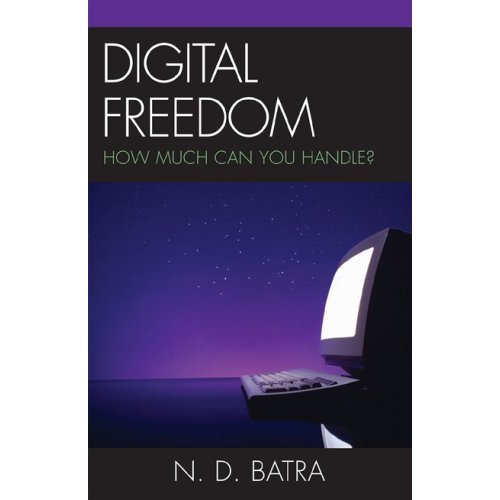
(ND Batra is the author of a forthcoming book, Digital Freedom: How Much Can You Handle? to be published by Rowman & Littlefield in August)
Tuesday, February 27, 2007
DOING PUBLIC DIPLOMACY IN A FRACTURED WORLD
Topics
Diplomacy

Tuesday, February 20, 2007
IRAQ AND US CONGRESS
USA’s white elephant
From The Statesman
In 2002, the US Congress authorised President George W Bush to go to war in Iraq based on Intelligence about weapons of mass destruction that later turned out to be inaccurate. It was expected that with the removal of the tyrannical rule of Saddam Hussein, a genuine regime change would occur with new hopes for democracy in the region. Instead of regime change, there was an implosion and the society collapsed.
The USA is no longer waging war in Iraq; it is now trying to stamp out sectarian civil war with the help of a sectarian government, though there seems to be no easy way out. Americans were not ready for a future of this kind, a bloody mess that has killed 3,100 US troops; you might say, not a large number as wars go but if you consider hundreds of thousands of the Iraqi dead and the ceaseless daily carnage of civilians being blown off in streets and the marketplace, you wonder why no one ever imagined the probability of this kind of scenario of hell. Or why would anyone in his right mind think of imposing a regime change on any other country?
Having been complicit in the war, with the news media, the US Congress cannot end the raging sectarian violence, insurgency or civil war, by whatever name you call it, and bring peace to the region if it forces the President to bring troops back home. Comparisons with Vietnam are misplaced and silly. In 1975, when South Vietnam fell to the North, the war ended. Vietnam was united under the Communist government of the North and the country began to settle down and rebuild itself. Nothing of the kind would happen in Iraq if US troops were to withdraw today. If Congress were to cut funding for the Iraq war, consequently forcing the troops back home, Iraq ~ unlike Vietnam ~ would never return to itself. Last week’s non-binding resolution in the House opposing the administration plan for deployment of 21,500 more troops in Iraq was not such a thundering bipartisan move as it was supposed to be.
The resolution dutifully supporting the US combat forces in Iraq, while opposing the additional deployment was representative of the raging but impotent rhetoric in the country.The Senate in spite of Democratic majority, on the other hand, could not muster enough votes to debate a similar non-binding resolution rebuking the President.The non-binding resolution is more like a strongly written opinion piece, which the President does not have to veto but at the same time he cannot ignore.
Congress like most Americans want troops back home but it does not want to abandon Iraq, leaving people to chaos or the mercy of their neighbour Iran or other surrounding Sunni Arab countries. Hence the political schizophrenia and confusion worse confounding. Speaker Nancy Pelosi, the first woman ever to become leader of the House, said the non-binding resolution “will signal a change in direction in Iraq that will end the fighting and bring our troops home safely soon.” Her words drew thundering cheers but did not carry any conviction. She did not explain how this sudden change from the present sectarian violence between Shias and Sunnis, with the continuous insurgency, would end if the administration were stopped from carrying out the surge in deployment or even if there were effective reduction in the existing troop strength. In any case, even before Congress began to debate the issue of the surge in deployment of extra troops, the President had made up his mind to send 21,500 extra troops to Baghdad. And they are already on their way.
In the case of Vietnam, there was an alternative, a well-organised North ready to take over the whole country. That choice does not exist in Iraq because the country is splintered on ethnic lines and there is no well-organised force to transcend sectarianism and impose order on the country.Yet there has to be an alternative and Iraq must be put together again. The next few weeks would show which way the wind blows when President Bush asks Congress for $93 billion for the military for Iraq and Afghanistan. Democrats would launch another attack on the President’s failure to end the conflict in Iraq; and Congress would dilly-dally but would be unwilling to block the spending request to the President.
The Americans, though overwhelmingly opposed to the President’s Iraq policy, do not want troops to be denied of necessary funds. Increasing confrontation with Democratic-controlled Congress might, however, compel the President to explore some other ways of mitigating the situation; for example, recognising Iran and Syria as parties to the conflict and bringing them to the negotiating table. A diplomatic breakthrough the kind recently achieved with North Korea, based on negotiations with regional powers, might be a way out. But the search for diplomatic solution would require that the Bush administration must abandon any plan to invade Iran to forestall its nuclear weapon plans.
Democratic-controlled Congress can be effective in using its power of the purse by suggesting diplomatic means of negotiating peace in Iraq. It must urge the Bush administration to shed its inhibition in talking with Iranian authorities and develop common grounds with Iran in ending ethnic conflict in Iraq.
(ND Batra, the author of a forthcoming book Digital Freedom, being published by Rowman & Littlefield, teaches communications and diplomacy at Norwich University)
Topics
Diplomacy
Tuesday, February 13, 2007
TOWARD A NATION OF NON-FAMILIES
Married families dwindle in USA
From The Statesman
ND Batra
Married people in the USA are in a minority now.
In 2005, according to the latest report released by Census Bureau, only about 49.8 per cent of households were families with traditional (heterosexual) married couples with or without children.
Six years ago, 52 per cent of the households had the sanctity of marriage, according to the report. Others just lived together or alone and their number has been increasing. Much has been vanishing from the good old America. The American family may be one of the disappearing institutions, if present trends become irreversible.
Work as a primary source of self-identity, legal complications of marriage and divorce, the responsibility of raising children in a two-parent working family, and the acceptance of alternative living styles normalised by television shows are some of the reasons for diminishing the family.
Where would the American family values come from, if the trend continues? More than a generation ago, when television programme rating companies wanted to measure audiences, they replaced family as a unit with household, a term that includes nuclear families, single-parent families, unmarried couples with or without children, and live-together groups, including same sex people or those who share facilities for economic reasons or claim some other bonds. The media rating companies’ attempt to count households was not meant to be a social commentary upon changing American values but a practical approach to develop a unit of measurement so that they could set rates for television commercials.
The bigger the audience for a television programme, the higher the cost for a thirty-second commercial, regardless of how the viewers in a group were related to one another.But as television producers looked for programmes that would attract maximum audiences, they discovered that the marketplace was asserting its primacy in American society.
Work began to compete with the family. Women had a sense of liberation; they could control pregnancy, work and have fun without having a family. The media companies’ programming choices reflected the changing mode of consciousness, network of assumptions and values of the American people.
Love and sex without marriage and having children without marriage became socially acceptable.
For more than four decades, or you might say, since the availability of the birth control pill, social norms have been incrementally changing and Americans have begun to accept diversity of interpersonal relations, such as some of TV’s hilarious work and living groups, Seinfeld, Friends, and Sex and the City, for example, show.
Traditional family households like that of the 1970s’ television sit-com’s Archie Bunker, his stay-at-home wife and their live-in daughter and unemployed son-in-law; and the 1980s Dr Huxtable, his attorney wife and with their several growing up children continue even today in real life. But according to the US Census Bureau, their number, the number of “married with children”, has declined substantially, from 45 per cent in 1960 to less than a quarter of the total households. Single mothers with children head seven per cent of American households and they tend to be poorer.
The number of unmarried couples has been soaring during the last decade or so and today you might say that almost one out of 10 coupling Americans never rang their wedding bells; or they have been living in sin, if you are a conservative and believe in the sanctity of marriage.Many of them would have children. American society accepts out of wedlock children without any stigma of shame. One-third American households consist of people who live alone, or are groupies who just live together.
Why is the traditional American family vanishing?
A few years ago, some sociologists attributed the decline to the socalled marriage penalty income tax that two-earner married couples have to pay when their combined incomes push them into a higher tax bracket than they would be paying if they were to file as singles.Republicans used the marriage penalty tax argument to cut taxes and Democrats were not unsympathetic to the idea. But tax incentives and church-related faith-based initiatives did not encourage more people to get married or stay on married.
The family was not built by the government and cannot be saved by the government.
High divorce rate and acceptance of children born outside marriage have taken their toll on the family.
Against the backdrop of the dwindling married families, consider the bizarre challenge of some fundamentalists, a Mormon splinter group, from Utah who live with multiple wives and some of them have more than 24 children.The wives seem to be happy and so are the children, well, if television does not lie. A few years ago, a 52-year old fundamentalist was prosecuted and convicted for bigamy and child abuse because one of his wives was only 13 when she became pregnant with his child.He argued that he was exercising his religious freedom. Originally, the Mormon Church, the Church of Jesus Christ of Latter Day Saints, founded by Joseph Smith in 1830, allowed and encouraged its followers to marry and multiply. Polygamy was banned in Utah in 1896 as a condition for statehood in the Union, but even today there are 30,000 polygamous marriages in the state.
Americans accept unmarried couples, unwed mothers, bachelor fathers, same sex civil unions, multiple sex partners and all other kinds of human groupings but feel morally outraged when some one claims the right to be polygamous.
ND Batra is the author of a new book, Digital Freedom: How Much Can You Handle?
(Rowman & Littlefield)
Topics
Culture
Wednesday, February 07, 2007
Digital Freedom
Digital freedom structured
From The Statesman
ND Batra
While most digital media companies think inside the box and try to protect their works with copyrights, patents, trademarks and contractual laws, apart from using technological means such as trusted systems and digital rights management, Open Source movement has been offering an alternative way of doing work in cyberspace.
Open Source guys believe that if the underlying source code of computer software were made freely accessible, it would be easy to improve upon its vulnerabilities for the benefit of all. The marketplace works on the assumption that its open competitive system, too, would bring about similar efficiencies, which explains to some extent why Open Source free software has not been able to do any damage to proprietary systems provided by Microsoft, Apple and others.Vista, iPod are forever. So is the Open Source, coexisting in a competitive environment of the marketplace.
The marketplace needs competitive diversity. In any case, when people talk of free software, what they mean is freedom to creatively mess up with the underlying code and change it according to their needs.If you get Microsoft’s Vista, all you can do is to use the system as it comes, even if the company gives you a free copy. Not only is the underlying code inaccessible, the licence would also prevent you from any attempt to hack it open to correct its flaws, if any.Fixing bugs is Microsoft’s responsibility, and the company must do if it wants its product to survive.
An Open Source operating system such as Linux, however, gives you the freedom to build upon its underlying code and develop newer software programmes, though you might have to pay for a CD of Linux. In this sense, Linux is free and open, though you pay for it. Microsoft Vista is proprietary, though the company might give it free to schools, for whatever reasons.Sometime ago, Richard Stallman of the Free Software Foundation was quoted in the Associated Press as saying, “Proprietary software companies hand out free copies for the same reason that cigarette companies give sample packs to college kids ~ to encourage addiction.” That’s a terrible analogy to explain the behaviour of proprietary systems, but you get the drift.
Paul Wallich of the free software movement argued sometime ago in Scientific American that Internet culture thrives on freedom: “In some ways, it only makes sense that the Internet should run on free software: almost all its basic protocols were developed with US government funding by universities or contractors.“The Web is the brainchild of CERN, the European laboratory for particle physics near Geneva. But even after most of the Net’s infrastructure has been privatised development...of free open software continues.... The logic of the intellectual marketplace ensures that only the best code and overall structure ~ as judged by a programmer’s peers ~ will survive.”
The freedom he talked about is different from the freedom of the marketplace, which puts value on everything that passes through its portals.In its benign form, the marketplace is a platform for negotiations. But openness is no guarantee of survival of a product as the fate of the Netscape Web browser has shown. It must be understood that Open Source free software does not mean that it is in the public domain.You don’t need a licence to use a public domain software programme and you can do whatever you want with it. Nor can you take any legal action against the programme’s creator if there are problems.
On the other hand, Open Source software programmes are copyrighted and can be used only under a licence, just like proprietary software; but they come without any warrantee, to protect their creators from any liability.The difference between proprietary software and Open Source software is the degree of freedom that the latter gives under its licence.The greater the freedom, the greater is the responsibility of the user for fixing the problems that arise while using an Open Source programme. But by defining Open Source software and the conditions for licensing it in exclusive terms, some of its proponents seem uncompromising in their attitude. Some fear that the whole idea of openness might be stymied if proprietary companies were to release software that has some free features but is not really free enough to be deemed free under the strict definition of Open Source. And that could happen if proprietary software companies feel that they have to survive the challenge of Open Source.
But so far, the Open Source movement has not driven Microsoft or any other big company out of business. The challenge to Open Source is that it must be good enough to survive in the marketplace as an alternative to proprietary systems, keeping in mind that some proprietary programmes may assimilate its laudable features. That’s how the marketplace dialectics work. One of the claims made for Open Source software is that since the source code is open to modification, freelance programmers can fix bugs and eliminate any problem, which however has not always been the case.Besides, digital security is an industrywide global issue; it is not dependent upon the nature of the licence, open or proprietary.
Hackers love Open Source as much as they love Cisco, Sun Microsystems or Microsoft.
Topics
Technology
Tuesday, January 30, 2007
Business Diplomacy
Global corporate communications
ND Batra
The Statesman
Global companies have a lot to say and promises to keep, whether it is the new AT&T ready to deliver the world to your touch pad, Cisco’s human network making you the centre of creativity, or Intel with its new wondrous nanometer chip that will make 30,000 angels dance on the head of a pin.
Communication is the key in the conduct of successful corporate public affairs. Without a comprehensive communications strategy that takes into account all stakeholders who interact with the company and form its business environment, corporate communication cannot be effective. At the heart of communication is persuasion, even when a company is simply trying to inform the public about a new product, for example, a new nano-nano-transistor. Information is never neutral.
Power to persuade is the soft power that companies exercise to win the hearts and minds of the people.But to do so in a multi-channel environment over which a company does not have much control needs finesse, especially when the company has to operate in a global environment. Companies like AT&T, Cisco and Intel have become de-localised. They are no longer woven into the fabric of local communities as they used to be in the pre-digital age.
Company employees do their work in a virtual environment and their mobility makes them less concerned with what is happening in their neighbourhood. In an environment where companies are spread globally, it becomes difficult to communicate locally because companies don’t have local roots and they are not embedded in local cultures.
In an environment such as this, it would take extraordinary effort by global companies to communicate and present their position in a persuasive manner. Perception is reality and many people look at global companies as more powerful than the government, which draws enhanced critical scrutiny from the news media and NGOs. The image of power that global companies project raises expectations and fear in the minds of the people.
Growing expectations of corporate responsibility create unusual challenges for corporate communications and diplomacy. Because of the recent corporate scandals in the USA, which have put many senior corporate executives in jail, the Americans expect greater transparency from companies.
This may not be true of other countries, for example, China, where companies such as Cisco, Intel, Google and others may get away with behaviours that would not be acceptable in the USA, Japan or Europe.Since expectations of corporate behaviour differ from country to country, corporate communications strategies must take such cultural differences into account. Since effective communication takes place in a cultural context, understanding the host country’s political culture is important for corporate communications to be effective.
Culture includes the legal system as well as rules, which must not be violated in the host country. Keep in mind that good corporate behaviour is seldom rewarded; on the other hand, bad behaviour is punished as it sullies the company’s reputation. Companies should be problem-solvers and not become part of the problem.
Look at BP (Beyond Petroleum). It says it is an energy problem solver. Yet not much green has come out of its entrails. Each country has abiding cultural icons, its sacred cows that make global corporate communications quite a challenge. What is culturally and politically correct in one country may not be so in another.
Not understanding national cultural sensitivities and differences can create a nightmare for companies doing business abroad. While these general observations in the context of global communications are important, for corporate communication to be effective, it must be aimed at specific groups or audiences, especially, relevant to the company. They are: customers, financial analysts, government authorities, and non-business stakeholders such as NGOs.
Customers are the most important constituency for a company. They are the reason for the company’s business and the most important source of its strength. In a competitive environment, where one product may not be qualitatively much different from the other, keeping the customer coming back to the company requires communication at multiple levels, including what affects the product, price, image, and most of all the company’s reputation.
Let’s see who else, apart from Intel, can push Moore’s Law to the extreme. How a company presents itself publicly, through images, symbols and slogans, and how customers perceive the company would determine its place in the crowded marketplace. Trust and reputation are the basis of communication with customers. Wall Street analysts and financial journalists have become important because through their writings and analyses, they inform the investing public how valuable is the company in the marketplace and thereby sustain and promote shareholder values.But as many, recent, corporate scandals have shown, to raise the market value of their shares, companies sometime make false promises.
Analysts and financial journalists, instead of being impartial and objective reporters and critics, sometime become a part of the vicious conveyer belt, destroying public trust, and provoking harsh regulations.Communicating honestly with market analysts and financial journalists is important because it is through them that a company manages its image of financial strength and growth. Raising false expectations for short-term benefits can destroy a company’s reputation.
Corporate behaviour is regulated by rules which are framed in the public interest and in consultation with the industry. But once the rules are in place, not only the authorities but also public interest groups, many of which have established global networks to monitor compliance, closely watch companies’ errant behaviour. The Microsoft ordeal in the USA and Europe for anti-trust violation is a case in point. There are thousands of NGOs who have made it their business to scrutinise the behaviour of local, regional and multinational companies to protect the public and environment from exploitation. With well-defined demands, global NGOs with their huge and broad-based financial and legal support system can swing into a campaign mode against a corporation quickly.
Cooperating and communicating with them requires special diplomatic efforts. What and how to communicate is important. The importance of global reporting initiative is that it lays the foundation for transparency and trust. It provides guidelines for reporting on non-business matters, especially, sustainability and environmental concerns.
Such information eventually impacts business and a company’s reputation.One might argue that not every country is concerned about environmental and sustainability issues, so why bother. Global NGOs such as Greenpeace have no international borders and they make it their business to scrutinise every global company, including, one day, Google, Intel, Cisco and others.
Topics
Diplomacy
The voice of Shantiniketan
The Artist
A poem (1938) by
Rabindranath Tagore
[Translator’s Note: The number of songs composed by Tagore is about 2500. I am not aware of such statistics as regards his poems, short stories, novels, essays, letters etc. which, however, far out-volume his songs. As regards the number of his sketches, I understand that it is also about 2500. The bulk of his sketches are preserved in the archives of his Viswa Bharati University (means- World University, which has been a pilgrim place for the academics and the aesthetes since Tagore’s days till now from various countries) at Santiniketan (means: Abode of Peace-4 hour train journey from Calcutta). But Tagore took to visual art with enthusiasm only in the last decade of his life which has possibly saved him from a reputation as a painter to his great relief. His ever mounting fame in literature which was his life long dedication was indeed a rod held at him, as he felt, to keep up his standard which left him ill at ease with his literary exercises. But it was not so with his painting, where he was a free bird to fly at his will. In his own words – “In defiance of that fame my brush is free to-day as Nature’s”. Let experts judge if Tagore was an authority or a quack in painting. But did anybody appreciate canvas better than Tagore? The following poem, which he wrote three years before his death, will possibly answer this question.]
O Artist, for ever a traveler
Thou move on ceaseless, an astute observer;
Thine impressions in sketches
From far and wide the canvas fetches;
Countless trivia and momentous around
To thee blue blood and pariah are equally sound.
In the hovel there,
Only a few shanties bare;
Beyond, the arid land vast
Parched in the summer blast.
Do those ever entice a look humble
Or allure one to ramble?
Said thou, “By no means they’re low” –
This truth thine brush flashed aglow –
And we sit up and say, “Ah indeed,
These do deserve some heed”.
There they trot, some take rest,
Hardly they exist, their name none will quest;
Said thy brush, “They’re very much there” –
At once we say, “Ah yes, all beware.”
And only they are there,
Not the monarch of the empire;
To live in the dust of the earth
They are used to since their birth.
For his portrait the king spends a lot,
Alas, the maestro’s notice it draws not.
Its glamour dazzles the fools though,
Trite’s true self art heightens so.
O Artist, strange is thy bias,
To draw a banal goat slighting those uproarious;
The creature is not esteemed high
In its vegetables’ sneaky pry
So they chase it off
With due scoff.
But as thou exalt its goatish spree
I sit up to ask – “Who is he?”
There the goat-men wonder –
“Who is its owner?”
Yet, despite its claimant’s evasion
I know, it is thy heart’s creation.
******************************
‘Thou Hast Made Me Endless’ (3)
Rabindranath Tagore (1861-1941 AD) the Nobel Laureate of 1913 was introduced to the West primarily through the collection of English translation of some of his poems/songs captioned as ‘Gitanjali’ (=Offering of Songs). More translations of his works followed by the poet himself and others after he had won the Nobel, including poems/songs, dramas, short stories etc. However, such efforts were sporadic and sluggish, mostly on individual initiative, which still remain so. As a result, a vast volume of the poet’s works remains un-translated while, it appears, it is an impossible proposition to translate even a substantial part of the poet’s total works to permit those, not privileged by the knowledge of Bengali language, a reasonably broad view of his myriad creations where unfathomable perceptional depth of top grade aesthetics runs through, literally true to his song “Thou hast made me endless / Such is Thy pleasure”. Notwithstanding this, an upsurge of Tagore translation took place in the last decade of the twentieth century by virtue of a good number of eminent poets/translators e.g. William Radice, Joe Winter, Ketaki Kushari Dyson, to name a leading few, all of whom left their valuable contribution to this oeuvre and my book THE ECLIPSED SUN is a modest addition to this. I have put stress on a few aspects of the poet’s works, particularly those in his twilight years, which seemed to me quite inadequately covered so far. The followings are presented mostly based on this book.
RAJAT DAS GUPTA e-mail: rajarch@cal3.vsnl.net.in ]
Topics
Culture: Tagore
Tuesday, January 23, 2007
Behold! China is shooting stars now
US imperium under Chinese brolly
ND Batra
From The Statesman
About two weeks ago, China shook the world when it destroyed one of its own ageing, weather satellites by hitting it with a ballistic missile 500 miles into space, thus, signalling its intentions to weaponise space. Satellite networks are the global eyes and ears of the USA, without which it would be deaf, dumb and blind.
The USA cannot ignore the threat. Nor can any other country, including India. Through its trade surplus and growing currency reserves, more than a trillion dollars, mostly held in the US treasury, China has established a financial stranglehold on the USA. By becoming a financially dependent nation for cheap Chinese loans, the USA has little leverage left against China today. Borrowers cannot dictate terms to their lenders. Iran, North Korea, Sudan, Myanmar and others can safely look up to China for succour, support and protection. The USA cannot do much about it.
British historian Niall Ferguson, who left Oxford for greener pastures and is now the Laurence A Tisch Professor of History at Harvard University argued a few years ago that the USA may not have much choice but to assume the British imperialist mantle to maintain peace in the world.“True, the war against terrorism has a novel character ~ it is remote both geographically and technologically. It will nonetheless be Clausewitzian in principle, the wholehearted pursuit of a legitimate political objective by, regrettable but necessarily, violent means,” he wrote in the Times Sunday Magazine in December, 2003.
Karl von Clausewitz (1780-1831) was a Prussian General, whose posthumously published treatise, On War, advocating a policy of total war had a transformative influence on European military thinking, especially in Germany, with terrible consequences for Europe and the rest of the world. But that was some 170 years ago, when Clausewitz wrote that war is another method of carrying on international political discourse and diplomacy.Keeping in mind that in 1832 there were no weapons of mass destruction, nor were there any dirty bombs, anthrax and suicide bombers, total war might have been affordable.
Prof Ferguson argued that the USA should do what the British did during its Victorian heyday when Britannia ruled the waves. Americans could do better, he thought.While Russia and Britain failed to achieve their goals in Afghanistan, the USA speedily defeated the Taliban and established its military and political presence in the region. The temptation for the USA to make its presence felt in Iraq was much greater, in fact irresistible, because of its huge oil reserves, the second largest in the world, after Saudi Arabia.Saudi oil control has been creating a feeling of helpless dependency in the USA. The lure of Iraq opening up its oilfields to Western companies was an underlying force, though the Bush administration talked of spreading freedom and democracy in West Asia.
The Clauswitzian view of the world political situation is that the most dominant political power, in this case the sole superpower, the USA whose GDP is more than the total GDP of the next three economic powers combined, must maintain world peace at all costs.“Since 9/11, there has been an unmistakably Clauswitzian flavour to American foreign policy,” wrote Prof Ferguson; and that’s true, especially when you consider the Bush misguided doctrine of pre-emption. “Liberals, most prominently will fret about the violation of national sovereignty, enshrined in the United Nations charter. But it worked for the British,” he said.
No, the war doctrine did not work always.
Consider the French-British-Israeli (1956) attack against Egypt to wrest back the control of the Suez Canal, which ended in disaster. Or the Vietnam War, which still haunts the Americans. And now Iraq.
Imperial Britain could ignore the world opinion, which was not as well articulated as it is today in the age of global mass media and the Internet. According to the Pew Research Centre’s findings, anti-Americanism has been growing in Arab-Muslim countries.
Prof Ferguson has become a prisoner of history and seems to be incapable of fresh thinking. “The existence of a military ‘hyperpower’ that really means business that is able and willing to use its superior force may in fact be better for world peace than any number of international treaties,” he said.
This dangerous and impractical neo-imperialistic doctrine has brought the USA into a no-win situation in Iraq. The USA might have succeeded in buying support from General Pervez Musharraf and his ruling clique in fighting the Taliban and Al-Qaida, but it has not been able to win over the Pakistani people, without which there can be no lasting peace and reconstruction in Afghanistan, as we observe today.
Then there is resurgence of nuclear activity from North Korea. Can the USA impose its will upon North Korea without cooperation from China and Russia? Or on a defiant Iran bent on its nuclear ambitions, a rising West Asian power ruled by a kind of mullah-controlled democracy?
Add to the simmering witches’ brew, the defiance of Venezuela’s President Hugo Chavez, who is using his country’s oil reserves as a tool for building an anti-US international block.Prof Ferguson’s advice that British imperialism “can teach us how to match Random War with Remote War” has proved to be unwise.
The only way the war against Al-Qaida terrorism and rogue nuclear-states can be fought is through international alliances, not through superpower unilateralism advocated by a dead man walking the Harvard Square, the ghost of Karl von Clausewitz.
Those who remember history too much are likely to repeat it, to update an old saying.
While the USA has been pursuing superpower unilateralism and “old Europe” Clausewitzian imperialism, and consequently finding itself bogged down in Iraq, China has been spreading its power and influence in Asia and Africa through trade and commerce, and massive investments in fields, farms and factories.
Prof Ferguson could not have imagined that the American imperium would come under Chinese space and financial umbrella. Probably British schools don’t teach such arcane knowledge, do they?
Topics
Diplomacy
Tuesday, January 16, 2007
Corporate blogging as PR
Blogging as a communications tool
ND Batra
From The Statesman
The other day I wandered into bloggers’ land and came across an interesting blog by Jonathan Schwartz, CEO and president of Sun Microsystems, which truly made me like the man, albeit, I never met him. Schwartz talked about five things that he wanted the readers to know about him and he got many friendly responses.
Americans are fond of enumerating things: counting steps on a ladder to some place up and down, such as 10 ways to lose a girl friend; eight simple rules for innovation; seven habits of highly unsuccessful leaders; and the tenth rule for whatever… American society is predicated upon metrics. Everything has to be measured and assessed, including the American dream of an immigrant like Governor Arnold Schwarzenegger of “Kaalifornia”.
Schwartz’s five-point list about himself is revealing and makes him look like just an average genius, Joe extraordinaire; for example, once upon a time he was a security guard in a museum (that must be before the Americans learned how to spell Al- Qaida); that he is a mongrel, one quarter an India man (no wonder he is so good with computers), and the rest (especially his handsome youthful looks) of East European stock; that 20 years ago he was in a train crash and to prove it he put up a picture on his blog; that he loves cooking, which is not an uncommon American boast; and the last blah, blah: “I sincerely believe technology improves the world ~ from the solar panels on my home, to my choice of employer….”
Schwartz must have read How to Win Friends and Influence People. It won’t hurt if you praise your employer, especially if you happen to be the CEO of the company. Sun Microsystems says that its employees might say anything to explore “the magic of hyperlinking and the Web” while blogging, but issues a clear warning that “it’s not OK to publish the recipe for one of our secret sauces…. Talking about revenue, future product ship dates, roadmaps, or our share price is apt to get you, or the company, or both, into legal trouble”.
Schwartz’ blog is an exemplar of employee blogging. It puts a human face on the man who must think of the next quarterly performance or else….
Tuesday, January 09, 2007
The Corporate Diplomat
Corporate India & the news cycle
ND Batra
From The Statesman
The news media, including the Internet, has begun to play a significant role in the conduct of international business. Television news is converging with the Internet, making events live and spontaneous beyond anyone’s control. The rise of bloggers, online anonymous whistleblowers and other public interest groups who present alternative views of what companies are doing is another serious challenge.
Gone are the days when a business could be conducted beyond the public view. The heightened interest in companies is due to the impact on people’s lives, even if they are not directly invested. The very presence of Posco or Arcelor-Mittal in a poor state like Orissa raises fears and expectations, hence the intense scrutiny by the news media.
The news media in democratic countries have a privileged position regarding freedom of speech. In the USA, it is difficult to win libel damages against the news media because of the legal provision called “actual malice”, or “reckless disregard for truth”, as defined by the US Supreme Court. The burden of proof in defamation cases involving the media lies on the plaintiff, for example, on the company that sues the media. And because of the inescapable fact that our economic life, pensions, retirement savings and environment and quality of life have become dependent on the marketplace, no business can escape media attention.
The bigger the company, the more intense would be the scrutiny by the news media about its activities. Add to it millions of blogs that feed upon each other. But how should global companies deal with unconstrained global news media especially when for professional and competitive reasons bad news makes a good story? Companies have to become media savvy, understand how news media organisations work, how they produce stories and their reporting methods, and how to influence them by providing them with correct and timely information.
Companies have been using adverting as a major method of persuasion, which is still a powerful mode of direct communications with stockholders. But advertisement cannot beat headline news, breaking stories, or special reports with which the news media try to draw the public attention distracted by the infoglut. It is a big challenge for companies to be heard in an environment of always-on news media and the Internet.
Accounting scandals, obscene pay packages, golden severance parachutes, and personal misconduct of some CEOs have created an air of diffused distrust in the global corporate. Nevertheless, companies must learn how to create good media relations. Let’s keep in mind that no news media outlet or a reporter would turn a bad story into a good one, especially in the time of crisis. News is a competitive business and no one can afford to keep silent over a story that impacts the public. In good times, a company that has excellent working relations with the news media can strengthen its reputation by presenting positive stories and thus enhance its reservoir of public goodwill.
Consequently, when a crisis hits a company, the company could draw upon the public goodwill. The traditional method of issuing Press and video releases is still relevant, especially in the local news media outlet, where the paucity of resources might prompt a local television station or a newspaper to repackage a company’s story as news.But national news media organisations are inundated with e-mail news tips, and video and Press releases; consequently they hardly pay attention to the daily junk mail. It is important to know the right people in the news media. It is equally important for companies to pay heed to the Global Research Development Center guidelines on dealing with the news media in a productive way.When the news media come calling for information and comments, the company should offer full cooperation and the spokesperson should be ready with facts; or promise to provide the data promptly to meet the reporter’s deadline.
Whatever information is provided, it should be done thoughtfully and judiciously. It is difficult to undo or correct the information once it is out. Providing reliable and prompt information is one of the best ways to build bridges with the news media. Media interviews should be approached with great preparation and caution. Especially in a crisis situation, the interview need to be handled with great care and circumspection, and as much information should be given as it is necessary. There should be no room for misinterpretation. In other situations, for example, in the case of a new product being launched or a new business policy being implemented, the company CEO or the spokesperson should be able to answer the reporter’s question succinctly in a memorable way. This is the age of brevity and sound bites.
The ability to communicate comprehensively in a few words is a great asset, which a company spokesperson needs to develop. Another point to be kept in mind is that a television interview is different from a print media interview. For a television interview, the company’s CEO or the spokesperson, must do a few practice sessions with experienced experts in media relations before he appears before the television camera.
Television can be very unforgiving if one is unprepared. Handled properly, a television interview enables a company to reach millions of viewers without cost.A media smart company would look at the news media as a most important stakeholder and build good relations on which it could count upon in case of a crisis. It is a difficult task to accomplish because the news media’s interests do not necessarily converge with those of a company.
Keeping ongoing socials relations with important personnel in the news media such as publishers, editors, and various important reporters can be helpful to the company.
Top corporate leadership must incorporate the news media into their strategic planning.
Topics
Diplomacy
Thursday, January 04, 2007
Tagore: Thou Hast Made Me Endless
Cultural Notes From Rajat Das Gupta, Calcutta
Thou Hast Made Me Endless
Rabindranath Tagore (1861-1941 AD) the Nobel Laureate of 1913 was introduced to the West primarily through the collection of English translation of some of his poems/songs captioned as ‘Gitanjali’ (=Offering of Songs).
More translations of his works followed by the poet himself and others after he had won the Nobel, including poems/songs, dramas, short stories etc. However, such efforts were sporadic and sluggish, mostly on individual initiative, which still remain so.
As a result, a vast volume of the poet’s works remains un-translated while, it appears, it is an impossible proposition to translate even a substantial part of the poet’s total works to permit those, not privileged by the knowledge of Bengali language, a reasonably broad view of his myriad creations where unfathomable perceptional depth of top grade aesthetics runs through, literally true to his song “Thou hast made me endless / Such is Thy pleasure”.
Notwithstanding this, an upsurge of Tagore translation took place in the last decade of the twentieth century by virtue of a good number of eminent poets/translators e.g.
William Radice, Joe Winter, Ketaki Kushari Dyson, to name a few, all of whom left their valuable contribution to this oeuvre and my book THE ECLIPSED SUN is a modest addition to this. I have put stress on a few aspects of the poet’s works, particularly those in his twilight years, which seemed to me quite inadequately covered so far. The followings are presented mostly based on this book.
Poem: Biswashok (The Universal Grief) of the book PUNASCHA written in mid-thirties.
[Translator’s note: When the child of a woman died, she approached Lord Buddha with the dead body imploring him to restore life to it. Buddha said he would be able to do so if the woman could bring him a grain of rice from any home where sorrow had never entered. In spite of her frantic search when she failed to locate one, Buddha could explain to her that her grief was only a tiny part of the universal grief designed in God’s creation for our ultimate welfare, though not obvious to the obscured human vision.
Tagore was afflicted by the severest tragedies; including the death of his children and other near and dear ones, very often throughout his life. With amazing calmness he faced all these. More amazing, his personal grief never found an outlet in his vast literature, leaving aside his personal diaries, letters etc. which happened to be published. In this poem we get a glimpse of his saint like perception of the universal grief which enabled him to regard his personal losses as trivial. A poet is the voice of all mankind. He is not meant to mourn his own losses like a miser. He asks his pen to save him from such degradation in the days of his sorrow so that he remains true to the poet’s mission. Sharing this view will surely open up a broad vision for us lesser mortals also to gain strength amidst all our weal and woe.]
On the day of sorrow, I tell my pen
Put me not in shame,
Hold not before the eyes of all
The grief that is not universal.
Hide not your face in the dark
Blaze light flamboyant
Be not a miser.
Vast is the Earth,
Dazzling is its glory
Un-grieved is its nature;
Raising its head in the
Sun’s domain obscure,
Unmoved, severe is its unblinking stare,
Wide stretched its chest un-quavering
Across the hills, rivers and meadows.
It is not solely mine
But of the countless,
Its trumpet sounds in all directions
Its light burns unhidden;
Its flag flutters in the vault of heaven.
Disgrace me not before this panorama;
My loss, my pain
In this context is but a grain.
The moment I forget it is solely mine
It will take the Universal form.
I’ll perceive floods of sorrow
Pour down the Time
In various branches;
Rushes the great river of pathos,
Feeding Man’s life stream in every home.
The Brahmaputra (*) of tears (*)
Swells up in billows;
At the bank of every household
Proceeds its cataclysm
From country to country.
The warmth of that eternal sorrow,
Man’s eternal grief,
Suddenly finds its way into my heart,
Its deluge gives a severe jolt –
Strikes me to the bone;
Immersed in the universal anguish
Mine floats into oblivion –
Who knows why!
To-day I invoke my pen –
Put me not to shame.
Let its gift overflow the banks,
Its bounty hide calamity, my very own,
Link my mourning
With the vast universal melody
In thousands of cadence.
************************
(*) Brahmaputra is known as the river of sorrow in Assam, the Easternmost state of India, as its devastating flood is the cause of misery of a large populace there nearly every year.
DAS GUPTA e-mail: rajarch@cal3.vsnl.net.in
Topics
Culture: Tagore
Tuesday, January 02, 2007
Waiting for another Saddam Hussein?
No light at the end of the tunnel
From The Statesman
ND Batra
The death by hanging of Saddam Hussein would not immediately provide the USA with any opportunity to win the hearts and minds of the people, especially in the Arab and Muslim world, unless the sectarian violence and insurgency were suppressed and peace returned to the streets. But that would be a long time coming.
About four years ago, Iraqis were violently catapulted from the tyranny of a ruthless dictator with the promise of freedom they had never heard of before; but instead they landed into the raging chaos of decentred street violence. If the American troops were to leave the country suddenly, as some misguided people in the USA want, Iraq would plunge into a black hole that human beings have never seen before, that would suck the whole of West Asia into it. The defused and random tyranny of the social disorder, when a social system breaks down, is worse than any other form of tyranny.
The removal of a tyrant does not mean the dawn of freedom.
Don’t expect that to happen in North Korea.
The world knew Saddam Hussein’s monstrous crimes, the torture chambers, the gassing of the Kurds, the disappearance and murder of hundreds of thousands of Iraqis buried in unmarked graves, and much worse, even the killing of his own two sons-in-law. When television repeatedly showed us in a glaring light the haggard, bedraggled, haunted, pitiable face of the captured Hussein that twisted and turned on command for examination for lice and saliva, we wondered, how did this man create the social apparatus, the machinery, and the network of collaborators that sustained his ministry of fear that lasted so long.
We need to understand how organised and systematic violence by the Sunni-dominated Baath Party under the dictates of one man subjugated Iraqis, most of whom are Shias, for more than three decades. How does tyranny perpetuate itself? Even though we saw pictures of the mutilated bodies of children, men and women, young and old, lying helter-skelter after they were gassed to asphyxiation, the ex-dictator was given the presumption of innocence until he was proven guilty.
Hussein’s crimes against his people were proven beyond a reasonable doubt. He could have been let go on the street or given up to his enemies and been done away with speedily, but that’s not the way justice should be done. Iraqis who lived in mortal fear of this man for such a long time succeeded in putting aside their anger, hatred and overpowering desire for revenge and allowed the conduct of a fair trial, which lasted for more than a year. The rights of an accused in the USA are enshrined and hallowed in the Bill of Rights, the greatest document ever written by the human mind, which is the ultimate source of American values, freedom of speech, freedom of religion and fair trial, all that is good about the USA, all that makes it a unique civilisation in the annals of mankind.
It is only by judging the worst amongst us in a fair and open trial that we test our values, affirm our faith and renew ourselves as an open society. It was a fair trial, open to international scrutiny, conducted by Iraqis with the help of international jurists.A new era of transparency in Iraq based on the rule of law might open up one day; and as a corollary, a great challenge to closed West Asian societies based on absolutism showing them how life could be better for them under a different system.
Through Hussein’s trial, we might understand one day when more information is available on how he built such a durable one-man command-and-control system, the tyranny that lasted for decades, and which might have continued but for the intervention of an outside power. The trial based upon the rule of international law should be a warning so that in future, no one could abuse power without fear of punishment. And what is true of Iraq is also true of other countries where tyrants hold their sway.
While Saddam Hussein is dead and gone from the scene, daily violence and killings continue in Iraq.
There does not seem to be any light at the end of the tunnel.
But one cannot give up hope.
President George W Bush and Prime Minister Tony Blair would be judged by history whether they were justified in invading Iraq and if so why they failed to establish a new system that ensured law and order for the common people, whose need for security in the beginning weighed more than their hunger for freedom.
So would be judged American journalists and think-tankers who wrote volumes and uncritically supported the White House’s war against Iraq without foreseeing the consequences of the system breakdown; and UN’s oil-for-food underhand traders, who illegally enriched themselves while Iraqis suffered, and are now showing a holier than thou attitude.
Iraq’s tragedy is now a global responsibility.
Topics
Diplomacy
Tuesday, December 26, 2006
Gay N' Straight
Bless them all, gay & straight
From The Statesman
ND Batra
‘We must recognise that many gay and lesbian couples in New Jersey are in committed relationships and deserve the same benefits and rights as every other family in this state,” said Governor Jon Corzine of New Jersey at last week’s Bill-signing ceremony that legalises civil unions between same-sex couples.
Last October, the New Jersey Supreme Court issued a directive that gay couples be given the same rights as hetrosexual married couples, whatever the lawmakers might call such a coupling, civil union or marriage.
The biblically minded Americans believe that their children should never crouch toward Sodom and Gomorrah. And contrary to scientific evidence, many Americans consider homosexuality to be a cultivated lifestyle and wistfully think that one could be weaned away or deprogrammed out of it.Every year, schools witness fierce battles between parents and teachers as to what kind of books children should read, which sometime triggers the banning of books related to homosexuality.
Homophobia has led to violence and killing of the innocent, though in public discourse it is politically incorrect to talk about gays in derogatory terms. When the Massachusetts Supreme Judicial Court affirmed its earlier decision in February, 2004 that gays have the legal right to say “I do, I do… for richer or poorer… till death do us part,” many Bostonians went crazy. And when the Massachusetts legislators met in a constitutional convention to consider how best to nullify the divisive ruling of the highest court, hundreds of people milled around the Statehouse in Boston, some carrying placards, others shouting slogans and chanting: “Hey, hey, ho, ho/Homophobia got to go; Adam and Eve, not Adam and Steve; One Man, One Woman; Equality Now.” It sounded like the beginning of another civil war.
Nothing has divided the American people so painfully since the question of slavery as the issue of what to do with “the queer” amongst them, gays and lesbians, who have been outing themselves in hordes and getting into their faces everywhere, in television sitcoms, school textbooks, magazine covers, dance floors and legislatures. Although Americans by and large oppose gay marriages, they are inclined to accept civil unions for same sex couples that would grant them the same rights as heterosexuals have.
My home state, Vermont, was the first state to recognise civil unions for same sex couples but only after the state’s highest court ruled that gays were being deprived of the constitutionally guaranteed equal rights, and directed the state legislature to eliminate the discrimination against gays.
The Vermont highest court did not rule on marriage; rather it ruled on equal rights for all citizens, which included healthcare benefits, inheritance, separation, and other rights that go with marriage.
The Massachusetts Supreme Judicial Court went to the extreme and challenged the very definition of marriage: If marriage is essentially a union of hearts, commitment between a couple, it could be between Evelyn and Steven or Even and Steven; therefore, the concomitant rights and obligation of such a commitment must be respected.
But that’s not what the Bible says. That’s what the Constitution says.
It is only in the mass media that you see the USA as a homogeneous country.
In reality, the USA is one nation divided by diverse cultures, creeds, colour and lifestyles. Massachusetts’ legislators failed in passing an amendment that would have banned gay marriages. Fearing the tide of gay unions, 38 states have passed laws that recognise only heterosexual marriages. So what would happen to a Massachusetts gay, married couple, let’s say with adopted children, when they move to a no-gay marriage state?
The state of union today is no different from what was before the civil war when in some states slavery was legal and in other states, illegal. No politician who seeks a public office can duck the question of gay marriage. Many favour the civil union route to solve the thorny problem. President George W Bush, a devout Christian, has said unequivocally that marriage is between a man and woman but he got no support for a federal constitutional amendment banning gay marriages.Nonetheless, a 1996 federal law defines marriage between a man and a woman, which means that a gay partner won’t be able to collect social security benefits from the federal government after the death of the partner.
The best solution may be to eliminate the word marriage from the American lingua franca and replace it with civil union for all whether gay or straight. Eliminate husband and wife and replace them with spouse. The priest should say: Now I pronounce you spouse and spouse. Now you may kiss the spouse, blah, blah. Words have unstable meanings in the digital age. They change, they die, and they are born again.
Occasionally, I see advertisements in my local newspaper that run like this: A husband (handyman) for a day at a reasonable hourly rate. Wife (sewing woman) wanted, good salary and benefits. Living together and having children out of wedlock used to be considered an unpardonable sin (Consider Nathaniel Hawthorne’s The Scarlet Letter) but it is now so commonplace that wife and girlfriend or husband and boyfriend have become interchangeable.A recent survey said that 85 per cent Americans, both men and women, admit to having pre-marital sex.
The USA is indeed a melting pot; but of what? Confusion worst confounded. Nonetheless, I would say, this is the best country to live in, the shining city on the hill.
Topics
Culture
Tuesday, December 19, 2006
GOD MUST BE BINARY
Think digitally, act globally
From The Statesman
ND Batra
For most businesses, the best digital strategy is to look for an innovative technology, an idea or a business method that creates something new, a cyber-niche that never existed before, and establish market dominance, as long as possible or until another one appears and makes it obsolete.
But a company doesn’t have to be innovative all the time; instead it could troll the digital world and adopt innovations. This is one of the reasons that US companies are offshoring their businesses abroad because offshoring captures unutilised brainpower.Remember: brainpower has no nationality in the borderless world.
You can pick anyone’s brain anywhere, if you can pay for it. If we network the world’s best brains, the rate of innovation would increase dramatically.But it also means that the rate of obsolescence too would increase, leading to a prolonged state of turbulence. Turbulence could be a source of self-renewal or self-destruction.
File sharing in creative expression, for example, in music recording, has been generating turbulence that has necessitated new business models, such as iTune on iPod and so on.The Internet is challenging old thinking and old methods of doing business. Businesses, however, flourish in a stable environment. Whatever one might say about Microsoft Corp monopoly practices, its operating system, Windows and now Vista, has provided a universal standard and created operational stability.
But sometimes an innovative application could be replaced with a substitute without adverse effects or disruption. For example, Microsoft’s Internet Explorer overtook Netscape browser, Navigator, which had reached a critical mass.In the digital age, technological innovations have a short life span. Google’s innovations might dispatch Microsoft to the dustbin of history one day. China’s software companies might soon eat India’s lunch. In the digital age, Bangalore cannot afford to take a nap.
Bangalore and Microsoft must ceaselessly innovate or perish.
Global digital connectivity and the marketplace are the primary forces breeding today’s innovations. The Internet has transformed the world’s economy from an industrial to a information economy in a span of one generation. Gordon Moore predicted that every 18 months, computing power will double at constant cost and his law has surprisingly held its sway.
The same has been true of the bandwidth, which is becoming faster and cheaper, giving rise to myriad opportunities, for example, electronic trading marketplace, in which split seconds count, as The Wall Street Journal recently reported in a front page story (“Firms Seek Edge Through Speed As Computer Trading Expands”) enabling traders to make millions by the end of the day.Miniaturisation and speed have gone hand in hand with the power of networks, whose value increases dramatically with each additional node.
From automobiles to public buildings, from cardiac pacemakers to battlefields, inexpensive digitisation has begun to penetrate everything. Whatever is digitised could be networked and shared and enhanced. In theory, every human activity can be digitally designed and built with an Internet connection, which would make every entity that is network-connected both as a consumer and a supplier of information. The global supply-chain system of information would become an inexhaustible source of value-added information. Networked databases are capable of profiling potential customers as well as terrorists. Offshoring not only reduces transaction costs but also generates new ideas and applications.
Core and the ring ~ a dynamic and stable core of senior executives and a fluid and flexible ring of contractual employees, such as outsourced contractors or offshored workers ~ is the emerging shape of a modern global business. And from this point of view, a modern global corporation has become a complex system of international relationships, both cultural and diplomatic, with business partners and customers digitally spread.It is not that the brick and stone aspect is no longer important; nonetheless, it is the rule of the digital. That’s the future.Smart global corporations are always trawling for newer applications and knowhow to use them before anyone else does.That’s how they go from incremental to exponential change.
But this is not the first time that a killer application is changing the world fundamentally into a networked world, a world of collaboration.Networking first began when telegraph reached a critical mass in 1843, making possible the rise of the Associated Press, the first network of collaborative information gathering and distribution, which eventually led to US and Western domination on information, the way we see the world and ourselves. But not all killer applications have the same impact on society.
Chinese invented the moveable clay and metal type printing press in 1041 with little social consequences for the Chinese society. But when a German craftsman Johannes Gutenberg re-invented the movable type printing press in 1436-1440 and published the Bible in 1452, he couldn’t have predicted the unintended consequences.In the hands of Martin Luther, printing became a killer application, which he used with devastating effect against the Church and unleashed Protestant Reformation that led to prolonged civil strife in many European nations; and the beginning of Renaissance, and some would say, the age of the European colonisation. Printing and telegraph, from our standards, were slow.
Digitisation transforms whatever it touches at the speed of light.
Here’s an unpardonable, sinful and sinning, digital afterthought: God must be: Binary, Zero-One, She-He, Ying-Yang; not the One and Only One.In the binary world, there’s no clash of civilisations.
Topics
Technology
Tuesday, December 12, 2006
The Digital Future
You can’t hide in the digital world
ND Batra
From The Statesman
It is a transparent world. You can neither hide nor run.
When jobs could be moved from one digital hub to another, one never knows where the axe might fall. Or who might run away with company secrets.
Since most office workers use the Internet and communicate via e-mail, companies are watching closely how their employees use the office electronic resources, including what they save on their laptops or access through their BlackBerrys.
Several court decisions regarding workplace privacy indicate that in the USA employees have few privacy rights over their e-mail if it is stored in the company’s system. Employers no doubt have legitimate concerns especially regarding the confidentiality of their trade secrets; on-going contractual negotiations; pornography and messages exchanged among employees that might lead to legal liabilities for the company; and whistle-blowing and other activities that may affect the reputation of the company.
These concerns are not new but the speed with which transactions are done on the Internet has created a state of perpetual paranoia. Frequently, employees also visit popular sports websites to check scores and also do online shopping and stock trading. Many of them keep chatline or instant messaging service open while doing other work.
Some multi-tasking in the workplace has always been there but the Web has created new opportunities and now it is becoming a common occurrence. With continuous restructuring and layoffs, many working people keep networking and looking for new job opportunities. Companies are watching who is applying for jobs and if anyone is trying to cross over to a competitor, he should not expect his boss to be merciful. Ironically, as offline and online worlds collide and converge, workers do not regard the office as a place of work only.
Nor is the home exclusively for the family. If a person is expected to carry his office on laptop to his home, why can’t he do his family chores in the office? The question can’t be ignored because the number of people who telecommute and have their home computers networked to their office server is increasing.
When home and office couple with each other, privacy ends for an employee. Putting employees into a digital straightjacket generates a coercive environment and might eventually adversely affect productivity. If monitoring is being done for measuring and evaluating efficiency, preventing fraud, protecting intellectual property and trade secrets, maintaining conducive workplace environment or whatever reason, the rationale must be explained to employees and the policy clearly laid out. Although courts favour employers at present, productivity depends on workers. We are slipping into a low-intensity surveillance society. Since 9/11 our sense of insecurity, both physical and economic, has increased manifold.
The American people are quietly submitting to whatever brings them a feeling of assuredness. Protests against intrusiveness by the government and businesses into our personal lives have become muted. Our computers know all about us and could tell tales.
Web bugs and other online surveillance devices are being increasingly used by businesses to track users when they surf their websites. Tracking is done unobtrusively and the user can never suspect that he is being watched; nonetheless, the practice is questionable, especially when the website does not declare in its privacy policy.
Advertisers surreptitiously place cookies, small software programs, on our hard drives to track where we surf so that they can customise the most appropriate advertising message for us to achieve target marketing, reaching the right person with right message. But web bugs are different. They can be programmed to collect whatever data is required without the knowledge of the user. For example a web bug can be programmed to look at a data file on a networked desktop without leaving a trace that data has been touched at all. When you look at your bank balance online, the web bug too could be monitoring it.
Some companies use web beacon, a single-pixel picture, to count and identify users. A web beacon can track whether a particular message, including junk mail, has been opened and acted upon or not. Any electronic image that is part of a web page, including a banner ad, can be programmed to act as a beacon and spy on the user.
Companies claim that the information enables them to personalise the surfing experience when a frequent user visits their portal, but they assure us that no personally identifiable information gathered from the beacon research is shared with the clients. Surveillance technologies are not limited to the Net. Several companies are using biometrics, face recognition, radio frequency and global positioning system (GPS) technologies, to keep a watch on their properties and track suspects. Many car rental companies in the USA use GPS to keep track of their rental cars. If a car is stolen or is involved in an accident, the company would know the exact location of the car. GPS also enables them to check the speed of a rental car.
I see the future now.
Along with our baggage, we too might have to wear radio-frequency ID tags so that we can be monitored as we move from one airport to another, from country to country via GPS. It may not enhance security, but it surely is going to be multi-billion dollar business. The security marketplace may determine how much freedom we would enjoy in the digital future.
Topics
Technology
Thursday, December 07, 2006
Wal-Mart's Indian Diplomacy
Wal-Mart comes wearing Bharti sari
ND Batra
From The Statesman
I was buttonholed the other day: If China is not afraid of Wal-Mart, why should India be? Irrational fear; may be, of another East India company setting foot on India?
When small things aggregate, they bring about great changes. The world’s biggest retail giant, Wal-Mart sells almost everything and at the lowest prices, providing low and middle-class people affordable access to goods which would have been otherwise beyond their monthly budgets.
Small entrepreneurs are the backbone of the Indian economy and they need to be exposed to the challenges of globalization and organizational innovations of Reliance, the Tata group and the Aditya Birla group, Bharti-Wal-Mart, Carrefour (consider its plan for opening an environmentally-friendly green supermarket in Beijing in 2008), and others. Fortunately due to the burgeoning middle-class unafraid of using credit cards, the retail space in India is expanding rapidly and giant retail stores like Wal-Mart would partly grow from within in joint ventures and some would come with FDI in different forms and shapes.
If India’s $250-300 billion retail market grows at the same rate as India’s GDP (8-9 %) modern retailing must emerge to satisfy the demand of the growing middle class. The government allows 51 % foreign direct investment (FDI) to companies that sell goods through single-branded stores. Through its Bharti franchise, Wal-Mart has found another passage to India and opened doors for other international companies. India is not only “a huge organic growth market for Wal-Mart,” but also a fast growing outsourcing market, with expected $1.6 billion merchandise export to Wal-Mart’ stores this year. But that is nothing what Wal-Mart buys from China, ($28 billion according to some estimates), and has created myriad entrepreneurial opportunities by establishing a most modern supply chain system. That could happen in India too.
There is a genuine apprehension that small shopkeepers and intermediaries would be adversely affected by the arrival of the global retailer, as it has happened in many places in the United States where many mom-and-pop corner stores have shuttered down and others are struggling to survive. “The High Cost of Low Price,” a documentary by Robert Greenwald showed the seamy side of the retail giant, including the denial of health coverage to employees, exploitative wages for women and the elderly, ethnic and gender discrimination and many other not so legal practices, for which ultimately the taxpayer bears the burden.
The Indian Left should focus its attention on not only how Wal-Mart treats its employees but also whether India could be another outsourcing hub for the hungry global giant with 2000 worldwide stores, including 66 in China (plus another chain of 100 Trust-Mart stores it plans to buy for a $1 billion deal). The retailer is able to do so by buying massive quantities from inshore and offshore sources and hiring people at low wages, mostly women, and that may be of some concern to Left political leaders in India. In the long run such business practices of global companies may have greater impact upon the world than terrorism and natural disasters. As Nelson Liechtenstein, professor of US labor history at the University of California, Santa Barbara, wrote in the Globalist, “Wal-Mart rezones our cities, determines the real minimum wage, channels capital throughout the world — and conducts a kind of international diplomacy with a score of nations.”
In the United States it keeps overheads low by hiring mostly female workers at wages much less generous than it pays to its male employees. In 2001, six women sued Wal-Mart for discrimination. Six women snowballed into more than a million current and former women employees who in a class-action suit charged that Wal-Mart paid less and gave fewer promotions to women than to male employees.
In the land of presumed equality, that was a serious accusation and had become a public relations disaster. And the U.S. District Court Judge Martin J. Jenkins found that the plaintiffs did “present largely uncontested descriptive statistics which show that women working in Wal-Mart stores are paid less than men in every region, that pay disparities exist in most job categories, that the salary gap widens over time for men and women hired into the same jobs at the same time, that women take longer to enter management position, and that the higher one looks in the organization, the lower the percentage of women.”
Gender and race-based discrimination is an unacceptable practice in American society; and that’s how it should be in India, whenever a foreign company is allowed to do business.
This is however not the first gender-discrimination class-action suit against corporate America. Home Depot, Texaco, Coca-Cola, Public Super Markets and many others were hit with class-action suits for discriminatory employment practices and paid millions of dollars in settlement.
Legal and humanitarian precedents set in the United States should be followed whenever Wal-Mart and other multinationals come to India, where local companies too should have no choice but to offer competitive opportunities to their female employees at par with what they offer to males, which should another benefit of globalization. These should be the terms that political leaders offer to Wal-Mart (which should be more than wearing an Indian sari and bindi on the forehead) wanting to do business in India.
Topics
Diplomacy
Tuesday, November 28, 2006
Chinese bull in an Indian shop
Chinese visit was just sweet nothings
From The Statesman
By ND Batra
President Hu Jintao’s repeated statement during his four day visit that India and China were “partners for mutual benefits,” rather than “rivals or competitors” was nothing more than what a year and half ago Chinese Prime Minister Wen Jiabao’s had said at the conclusion of his visit: “India and China are partners, and they are not rivals. We do not look upon each other as adversaries.”
It seems both leaders received the same expert diplomatic advice: Stick to the message. And the message: Exchange of diplomatic platitudes to advance China’s business interests. In diplomatic terms, judge China by what China does, not by what it says. Look at the Chinese activities in Pakistan, an all-weather friend ~ from financing the building of a deep seaport, Gwadar, at the gateway to oil-rich Middle East to its overt and covert contribution for developing nuclear energy and weapons; investing and building road links with Bangladesh; and its surveillance station in Myanmar’s Coco Islands. Myanmar like North Korea has become heavily dependent upon China for trade and diplomatic support.
Nor should it have gone unnoticed China’s non-committal support for India’s efforts to access civilian nuclear fuel through Nuclear Supplier Group. President Hu’s vague official statement that “China does not seek any selfish gains in South Asia and is ready to play a constructive role in promoting peace,” has no constructive and operational meanings. China would like its presence to be felt in the Indian subcontinent. India might put up a brave face and assert that it has transcended the feelings of betrayal and humiliation when China attacked in 1962, but it does not have a definitive answer to the question whether Chinese intentions have changed. China is still holding a large chunk of territory in Kashmir, 38,000 sq km (14,670 sq miles) of Aksai Chin, which it seized after the 1962 blatant aggression, and claims more. Just before the visit it re-asserted its claim upon the entire state of Arunachal Pradesh. Another 5,180 sq km (2,000 sq miles) of northern Kashmir was given by Pakistan to Beijing as a bridal price for an all-weather friendship pact signed in 1963.
China had already built a road through Aksai Chin linking Tibet with its Xinjiang province before it laid an aggressive claim on it. Now it seeks a diplomatic solution by keeping silent over the border problem. During the eagerly visited by a Chinese President in ten years, border problems were hardly discussed. So India might eventually be persuaded under the pressure of future benefits of trade to give up its claim on Aksai Chin in lieu of India keeping what is already an integral part of the country, Arunachal Pradesh. That’s what Prime Minister Zhou Enlai said after the post-1962 aggression that India should accept “the present actualities”.
So it is back to the future with the same old Chinese argument: You may claim Aksai Chin, but we control it. China has not withdrawn other claims it makes on Indian territories. India has to create new bargaining chips in dealing with China. Trade and technological cooperation could continue to grow as they have been doing in the past few years even without a final resolution of the border dispute, though much is being made of India-China trade relations. If China is now India’s second-largest trading partner, after the USA, with a bilateral trade of $20 billion, it shows how small is India’s total foreign trade in comparison with that of China.
What does India export to China? Mostly iron ore, raw material for its construction industry and other semi-finished goods in exchange for electronics and high value added manufactured goods, which are hurting small manufacturers. China sells value-added goods to India, much as the British did during colonial times. What would India sell to China to increase to the two-way trade to $40 billion by 2010? At the current state of affairs, it would be an unequal trade relation. With its future trade surpluses, China might become a moneylender to India as it is to the United States.
It is important however to acknowledge that trade helps create jobs and reduce tension in international relations, but raising the expectations high to the level of “strategic and cooperative partnership” is not only ridiculous but also dangerous. A free trade agreement with China at present would be counter productive because it would give it an unlimited access to Indian market, which would cripple Indian manufacturers, as it has done in the United States. While the United States is a complex and dynamic economy and creates alternative jobs to replace the ones lost to Chinese manufacturing, India cannot follow the US example. As is being noticed that India is competing with China for energy, scarce raw materials, intellectual property, and outsourcing. While there are possibilities of cooperation, the competition between the two unequal countries is getting tougher.
China would cooperate with India only when it cannot compete and beat India. India’s cooperative and strategic relationship with the United States, Britain, Germany, France and other European countries ranging from fighting terrorism and the security of the Indian Ocean to sophisticated technology sharing (including nuclear energy) and building a knowledge society is far more important than another round of hype about India-China partnership. When American and European political leaders visit India, they come with business plans. Their smiles and handshakes are meaningful. Just watch what happens during the visit of a most high-powered Business Development Mission, led by Under Secretary for International Trade, Frank L. Lavin, currently touring India.
Topics
Diplomacy
Tuesday, November 21, 2006
Look at China, again
China: A global role model?
ND Batra
From The Statesman
President Hu Jintao of China is visiting the Indian subcontinent this week to bolster trade ties with India as well as re-establish balance of power between India and Pakistan by offering the latter, according to reports, nuclear energy deals.
China has been growing at the rate of more than 9 percent for the past two decades or so, and is expected to become an economic and military heavy weight in the coming decades. Since the authoritarian rule has not held back China from growing at a phenomenal rate, it is legitimate to ask: How could they do so much in such a short time without freedom and civil liberties?
Even Vietnam, growing at more than 8 percent, has begun to follow the Chinese model.
May be Francis Fukuyama should revise his thesis which he prematurely delivered soon after the collapse of the Soviet Union: “What we are witnessing is not just the end of the Cold War, or a passing of a particular period of postwar history, but the end of history as such: that is, the end point of mankind’s ideological evolution and the universalization of Western liberal democracy as the final form of human government.”
Rather too soon, I am afraid, the end of communism brought about a sense of complacency, a grand illusion as if it were the final triumph of freedom. Of course that did not happen. It did not happen in Russia after the Soviet Union disintegrated; and it did not happen in China in spite of 1989 Tiananman Square pro-democracy protests; and in spite of rapid economic growth and broadening prosperity under state controlled national mercantilism. China has no doubt ceased to be an imminent threat since its economic growth has become increasingly tied up with search for energy and other raw materials, foreign direct investment, and exports, especially to the United States.
Today China, ironically, is the United States’ biggest foreign lender; and so, unsurprisingly, human rights have ceased to be an issue in the United States-China relations. Congresswoman Nancy Pelosi, the Speaker-elect of the House of Representatives, has been a great critic of China’s violation of human rights and unfair trade practices. But now that Democrats control both the Senate and the House, it has to be seen how far Speaker Pelosi would let her grandmotherly compassionate idealism be compromised by international realities of Chinese economic clout.
Recently when China said it might diversify its foreign exchange holdings, lo and behold, dollar began to slip. The dollar regained its dignity only when China assured that it had no intention of diversifying its dollar holdings in the United States. China holds $1 trillion in foreign currency reserves (a substantial portion in the US) and it is growing $20 billion annually, thanks to its export driven economy and controlled currency value, which some call as currency manipulation.
Between the United Sates and Saudi Arabia and other seemingly pro-American Muslim-Arab countries in the region, where fundamentalism has been holding a long sway, human rights and freedom were seldom an issue. After the 2001 terrorists attacks, the United States bonded with Pakistan using financial and military ties to make it an ally against the Taliban and Al-Qaida terrorism. And to maintain its relations with Pakistan, the United States soft peddled the issue of even the black-marketing of nuclear technology by one of the world’s most notorious scientists, AQ Khan. Military rules the land, albeit partially. “Jihadis” flourish.
Pakistan is not a failed state, but it is in a state of failure. It cannot govern itself alone. The United States has not given up the realpolitik of cosying up with authoritarian regimes regardless of its messianic fervour of spreading freedom universally.
The rhetoric of freedom and liberty seems to be a posture of public diplomacy for winning the hearts and minds of the Arab-Muslim world, but it is not working. Bush earnestly believes that the United States would remain vulnerable to terrorism so long tyranny and hate ideology prevailed abroad and for which, according to him, there’s no other solution except to expand freedom.
“The survival of liberty in our land increasingly depends on the success of liberty in other lands. The best hope for peace in our world is the expansion of freedom in all the world,” said Bush long ago, at the beginning of his second term; and so much has changed since then. But an Arab/Muslim might say, look at China, where 1.3 billion people work day and night to churn out goods for the entire world without much fuss about freedom. Bush dare not tell China, democratise or else, because China is America’s major moneylender.
One day China would say: Dollar or us (Yuan).
With Iraq in mind, Bush has no doubt been steadfast in his rhetoric that the US “has accepted obligations that are difficult to fulfill, and would be dishonorable to abandon.” Earlier elections in Afghanistan and the Palestinian Authority raised some hope that eventually elections and sharing of power in Iraq too might bring about the beginning of law and order in Iraq, but it hasn’t happened. Freedom to vote is not enough because it does not mean the end of violence, poverty and unemployment, which provide a fertile ground for more terrorism.
Many countries, from South-East Asia to Africa, look up to China for aid and trade and as a working model, rather than the United States. That is the biggest challenge for the US diplomacy today, and may be for India too.
Topics
Diplomacy
Tuesday, November 14, 2006
Bush's Legacy
Bush can’t be a lame duck
From The Statesman
By ND Batra
The US mid-term election has swept Democrats into power both in the House and the Senate raising hopes that the excesses of the Bush administration, which to a great extent arose out of the events of 9/11, would be corrected.
The election was in fact a serious scrutiny if not a referendum on Bush whether the President’s policy of keeping the course was meeting the policy goals of bringing peace, if not Jeffersonian democracy, to Iraq, without the US troops getting bogged down for long. Recognising that a seismic shift has taken place in the political landscape, Bush withdrew his unflinching support for his embattled Secretary of Defence Donald Rumsfeld and discarded him like a worn- out horseshoe.
Only weeks before the elections Bush had asserted that the guy was doing a fine job and the country could not do without him, which was nothing but whistling in the dark. He knew which way the wind was blowing and had to change the course. Seeing the gentle but determined face of Congresswoman Nancy Pelosi, the presumptive Democratic House Speaker, rising as an apparition over his presidential legacy, Bush quickly realised that sticking to the old rhetoric might be part of the problem, and so he put up a new façade of sweet reasonableness and cooperation with Democrats. That’s what makes Bush a deft politician. He is the prime political mover in the country.
The speedy removal of Rumsfeld, who had become a metaphor for whatever went wrong with Iraq, made it easy for Democrats to come to the table and has opened the doors for bipartisan negotiations not only about how best to bring about disengagement in Iraq but also about other contentious domestic issues such as immigration, taxes, healthcare, education, climate change, and China.
Democrats too have begun to realise that the overwhelming electoral victory, which few of them were expecting to the extent they achieved, would make them vulnerable if they failed to make strategic use of their newly attained political power. During the election campaign they had much to complain about but offered few new policy alternatives including on Iraq.
Now that they have power both in the Senate and the House, Democrats have two choices. They could spend the next two years in investigating the failure of pre-war intelligence (WMD) and how the Bush administration conducted the war in Iraq that has led to deeper and unmanageable troubles. Or they could sit with Republicans and the President to find a workable solution how to stabilise Iraq and bring about gradual withdrawal without damaging the US long-term interest in the region. Last spring Congress established a bipartisan committee, The Iraq Study Group, headed by former Secretary of State James Baker and former Congressman Lee Hamilton of Indiana to work out recommendations for ending sectarian violence and insurgency in Iraq and enabling the US troops to return home.
The group’s recommendations, which are expected to be available by the time the new Democrat-led Congress assumes office in January, would provide a focal point for the White House and Democrats to work together on Iraq.
Democrats don’t have much time before they begin the process of putting their own agenda for the next two years to cement their control over Congress as well as prepare for winning the White House in 2008. Indications are that they would eschew vindictive politics and try to win the hearts and minds of the people so that the next occupant of the White House is a Democrat. They know that most of the voters in the mid-term elections voted against Bush’s conduct of Iraq war rather than in favour of Democrats’ alternative, which they had none to offer. Iraq would play as much a significant role in the 2008 presidential election as it has done in the mid-term elections.
No one believes that Iraq, Afghanistan or terrorism would go away soon, which means that Democrats whether they control Congress or the White House or both in 2008 would have to deal with the international situation, even when they claim that the mess was created by the Bush administration.
In the next two years both Democrats and Republicans, whatever policy issue they contest, whether it is domestic or foreign, would share every failure or success, as it is meant to be according to the system of checks and balances of a divided government. 9/11 diminished freedom in the United States and opened space for President Bush to exercise immense political power during the past six years. He had many successes and made many mistakes, but now it is a question of consolidating the gains in Afghanistan and Iraq, and preserving his legacy; his legacy of going where no one had gone before: into the face of terrorism.
Only the British, and perhaps Indians, understand what terrorism is.
It might be politically unthinkable that Bush would let Vice-President Dick Cheney go at this stage, as he did in the case of Rumsfeld, but it would be wise to turn his Vice-President into a lame duck by letting him remain out of sight for the next two years.
Topics
America Today