Sunday, November 22, 2015

Tagore &^ Buber

My following letter was published in ‘The Statesman’ in their edition of 9th October, 2015. My letter was written in the context of Professor. Abhik Roy’s article ‘Tagore and Buber’ published in the 6th October 2015 edition of the paper where  he elaborated Tagore’s meeting with Buber, a great Jewish philosopher and spiritualist  thrice.  Buber is not very widely known in the academic circle and so I found this article important.

Rajat Das Gupta

TAGORE & CELEBRITIES
TO: The Editor                                      6th October, 2015                              
        The Statesman
Sir,
  From Abhik Roy’s article ‘Tagore and Buber: A meeting of souls’, I came to know about the Jewish philosopher and religious thinker, Martin Buber, who had met Tagore thrice. There were a few historical celebrities with whom Tagore was in touch. One of them was Victoria Ocampo who viewed Tagore’s enormity with awe, bur never shared the Poet’s immeasurable spirituality. The least that she could have done is to translate a fraction of Tagore’s vast works into Spanish and English.  The other celebrity was Bernard Shaw who once wondered how many wives that ‘bearded man’ had. One may also recall Einstein who believed that the Universe can be explained only by scientific data.Parnassus Americano: RABINDRANATH TAGORE Tagore inducted the factor of ‘Human Mind’ for grasping ‘Truth’ behind Creation, which was a ‘jolt’ to Einstein’s Theory of Relativity (E= m/c2). These two ‘rational minded’ stalwarts hardly met Tagore’s ‘soul’ which Buber did. He and Tagore were on the same spiritual pedestal. I am sure that the poet had Buber in mind when he wrote (in translation) ~
   At every land my home is there,
             Which I’m out to conquer:
   At every land there are my kith and kin,
   To reckon whom keen I’ve been
Yours etc.,
 Rajat Das Gupta, Kolkata
 6th October, 2015


Sunday, October 18, 2015

History is porous
Rajat Das Gupta ... Magazin - Gesellschaft - „Netaji Subhash Chandra Bose and Germany 
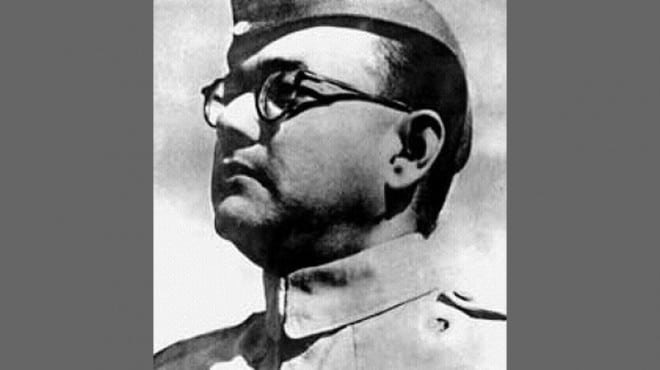
The controversy over de-classification of the documents relating to Netaji is about 7 decades old. Starting from day one of India’s Independence, we have watched ‘hush hush’ policy of our clever politicians regarding Netaji, and that legacy has snowballed rather than waned while with several changes in our Government, different ruling parties have stepped in as guardian of our nation. (Recent assurance by Modi to de-classify these effective 23rd January 2016 shows a ray of hope). 

Our crooked leaders possibly envisage that they can put history on Netaji under wraps eternally. But history is porous and one such loophole regarding Netaji is ‘Netaji Research Bureau’ who have in the course of time surfaced numerous events/facts relating Netaji and his Army ‘Azad Hind Fouz’ or ‘Indian National Army’ (INA), which reveal the simple truth that had Netaji’s ‘Delhi Chalo’ expedition been successfully completed, India would not be partitioned and there would not be Hindu-Muslim divide which is plaguing our nation exponentially. Before and even after Independence, Netaji was condemned by our spineless leaders as ‘Tojo’s Dog’, while they themselves were ‘Dogs of the British’ and none of them were able to think in Netaji’s dimension to launch a full-scale war against the British.
  Based on the said findings of ‘Netaji Research Bureau’, Late Narayan Sanyal wrote his book in Bengali in 1970 – ‘Ami Netaji-ke dekhechchi’ (I have seen Netaji) which is based on the narratives of those who came in contact with Netaji and were part of INA. I earnestly wish, this 512 page book be translated into English and other Indian languages and be circulated through Websites for the sake of our posterity who should not be brain-washed by the malicious propaganda our crooked leaders are trying to circulate even to-day. I am trying to brief a part of the last chapter as follows.
  Anwar and Hargobind, as a part of INA fought against the British. After Independence, Anwar joined Pakistan Army while Hargobind joined Indian Army. They met face to face at the close of Indo-Pak war in 1965, after long 19 years. I brief their encounter below.
 Hargobind was assigned the duty of handing over Pakistani Prisoners-of-War (POW) to the Pakistan Army. So, one morning 7.30 a.m. he marched the POWs to Atteri village (4.37 KM North East) to reach a Darga (Muslims’ worship place) there. They halted about 100 yards East of the Darga. About the same time, Pakistani Army personnel assembled 100 yards West of the Darga. Hargobind approached the Darga only with one Adjutant. The Commander of the Pakistan Army (Anwar) similarly came forward only with one attendant. They stood face to face after long 19 years! They were trying to assess each other how fogeyish they looked after this long time lapse. They shook hands and after initial pleasantries exchanged the POWs.
  Now it was time for departure. Hargobind watched Anwar was growing restive. His own mind also was gathering storm. But how to break the ice of the Army code? At last, Hargobind told Anwar, ‘Worry not Brigadier, we’ll meet again’. In fact, he returned their dialogue at the departing time while they were in INA, hoping to melt the ice. But Anwar did not budge from his Army code and replied, ‘Pray to Allah, let not that misfortune befall us again!’
  Hargobind felt insulted, as his Fouzi dignity was hurt before his Adjutant. ‘What do you mean?’ he asked. The Brigadier replied., ‘Nothing much! If we meet again, it’ll be at the Border, you facing West and I face East. I’ll be pleased to avoid such meet’. Hargobind missed his words to reply back. He said, ‘Well, let’s depart’.
  Now, Anwar looked more uneasy. Bit hesitant, he asked, ‘Could I meet you in private, if that’s not inconvenient to you’? ‘Not at all, Hargobind replied. ‘ Then let’s go aloof’.
  They stood aloof about 25 yards North. Both of them smiled. Anwar asked, ‘How are you’?’ ‘Quite all right’, Hargobind replied. Thereafter they exchanged family details. Yet, the ice was not melting. At last Hargobind requested Anwar to keep one of his request which was, before their departure, to join hands and give slogan together ~ ‘Jai Hind’, with which Mantra they were baptized to Azad Hind Fouz.

 Anwar was silent for a moment and his face blighted. ‘What the hell he is thinking?’ Hargobind pondered. He stretched his hand. But, with two hands in his pocket, Anwar stood stiff and said, ‘Pardon me friend’.
  Hargobind – ‘You won’t utter Jai Hind!’
  Anwar – ‘No more possible to-day, brother.’
  Hargobind – ‘Why?’
  Anwar was non-respondent. Hargobind felt dizzy. Can’t Anwar wish me ‘Jai Hind’! After long 19 years he won’t keep his request? Hargobind implored, ‘But one day you were even prepared to die with this Mantra!’
  Anwar – ‘I was; so what!’
  Hargobind – ‘Why can’t you voice ‘Jai Hind’ to day? This ‘Hind’ is not present day ‘Hindustan’; it comprises ‘West Punjab’, ‘NW Frontier Province’, and ‘East Bengal’.
  Anwar – ‘Yet, it is not possible’. Excuse me!’
  Suddenly blood shot up to Hargobind’s head. With clenching teeth he said, ‘Well, I do pardon you, though you don’t deserve it.’ Anwar’s eyes blazed up and asked, ‘What do you mean?’
  Hargobind – ‘I mean you were unworthy of the rank ‘Sardar-E-Jung; unfit to become a soldier of INA’.
  Anwar retorted, ‘Agreed, I was unfit; but you were not so! Can you voice all the slogans of INA? Well, then I’ll invite you to the other side of the border. Standing there, facing East, do join with me for the slogan, ‘Delhi Chalo’.
  In excitement Anwar was thrilling! He continued, ‘With that Mantra, prepared to die, we fought shoulder to shoulder. Say if you can! Not me alone, my whole rank will join you in that slogan – ‘Chalo Delhi Puker-ke, Koume Nishan Samhal-ke, Lal Killa pey Gar-ke, Larahe Ja, Larahe Ja.’ [=March on to Delhi voicing it (Chalo Delhi), holding thy flag, aiming Lal Killa, go on fighting, go on!’
  Hargobind became mum. The ice started melting, but both of them realized they had borne it in their heart mountain size! Hargobind then attempted to raise political points, particularly on Kashmir but Anwar desisted him as it was not venue for such discussion, which may be arranged later on suitable opportunity. And they were prepared to depart.
  Their heart was heavy. Possibly they had better not met! Hargobind pondered that Anwar was not wrong in his argument. They departed, but Anwar after sometime couriered a letter raising a host of questions relating to cold shouldering Netaji at Govt. level. However, this is not end of the story. The climax followed next day. Suddenly it was noticed that a jeep from Pakistan side was crossing border hoisting a Pakistani flag along with a white flag, with a sole passenger, no other than Anwar. He met Hargobind and said he had a sleepless night and that he thought of an escape route from the impasse, which trapped them the previous day. Hargobind wondered what that might be! Anwar explained, besides the two Fauzi slogans which sparked controversy among them the previous day, they had in the past voiced another slogan which did not imply any State, religious bigotry, but which speaks of humanity, to utter which there would be no bar for any of them. So, for the last time, with deep emotional embrace both of them voiced, ‘Netaji Jindabad!!’
  Narayan Sanyal gave high literary touch to this episode, but he had taken the core facts gathered by ‘Netaji Research Bureau’; so, it cannot be dismissed as Sanyal’s brainchild!
 ***********************************************
The writer can be reached at dasguptarajat@hotmail.com


Tuesday, September 09, 2014

Book Review by Clay Calvert, University of Florida


From Journalism Quarterly
September 2014 vol. 91 no. 3   617-619

Book Review: The First Freedoms and America’s Culture of Innovation: The Constitutional Foundations of the Aspirational Society, by Narain D. Batra


The First Freedoms and America’s Culture of Innovation: The Constitutional Foundations of the Aspirational Society. Narain D. Batra Lanham, MD: Rowman & Littlefield, 2013. 255 pp. $75 hardback


By Clay Calvert
University of Florida, Gainesville, FL. USA

Discovering the truth, voting wisely, and realizing one’s identity; it is a trio of well-established justifications for protecting speech under the First Amendment to the U.S. Constitution, corresponding, respectively, to free-expression theories known as the marketplace of ideas, democratic self-governance, and autonomy/human dignity.
To this list, Narain D. Batra now adds another important free-speech value—innovation—in his timely and example-packed tome, The First Freedoms and America’s Culture of Innovation. A professor of communications at Norwich University in Vermont who also writes for media outlets in India, Batra’s thesis in his latest book is clear: The First Amendment provides Americans with the essential cultural environment, the primordial soup or the embryonic conditions, for innovations to develop regardless of the process, whether it is recombinant, serendipitous, or simply someone fiddling and tinkering in the garage or with the iPad.
Citing and channeling Justice Louis Brandeis’ 1927 contention from Whitney v. California that “it is the function of speech to free men from the bondage of irrational fears,” Batra asserts that the First Amendment “creates spaces for innovative behavior by freeing us from irrational fears (whether it is stem cell research for life enhancement or redefining the idea of marriage by applying the Fourteenth Amendment to gay marriage rights).”
But the First Amendment and the culture of innovation it facilitates are only two of the necessary conditions for making the United States an aspirational society. The other variables, Batra believes, are a steady influx of immigrants that produces “brain flow” and an open economic marketplace (not simply a metaphorical marketplace of ideas). Simply put, it takes free speech, free markets and freed—not free—brains.
One strength of this book is the author’s ability to surf the pop-cultural realm to illustrate larger points about free speech, communication technologies, innovation and aspirational society. On page 22, we find erstwhile California Governor Arnold Schwarzenegger landing in hot political and cultural waters for a Saturday Night Live-infused crack about special interests, unions, and trial lawyers being “girlie men.” Exactly sixty pages later, we catch singer-actress Courtney Love diving into a very different cauldron of hot water for tweeting allegedly defamatory remarks about a clothing designer. And then there is Donald Trump’s The Apprentice, characterized as “a most spectacular materialization of the myth of the aspirational society.”
But these references are not to say that the book fails to approach its topics with gravitas. Batra’s chapter on China is excellent and, from an American perspective, almost exceedingly optimistic. He ends it by pondering whether China “has the unique cultural power to challenge the United States and the West.” Batra concludes it does not. “Authoritarian China cannot handle political freedom because it does not have the American cultural capabilities to do so,” Batra writes, adding that “the source of the unique American cultural capabilities is the First Amendment freedoms, which China cannot import without transforming itself into a different society, one that will closely resemble the United States.”
In other places, Batra’s optimism is tempered by realism. While stressing that a free market is necessary for an aspirational society, Batra openly acknowledges and analyzes corporate corruption, observing that, when left unchecked by a vigorous press, free market capitalism “can cause global havoc.”
He laments that “traditional news media organizations are either incapable of understanding the workings of Wall Street firms . . . or are prone to collusion with them through bribery, insider trading, careerism, or intimidation.” But even here there still is some optimism. In this atmosphere, Batra contends, “the public has no choice but to welcome and embrace a free-floating, footloose, beyond national-cyberorganization such as WikiLeaks.” Indeed, it is WikiLeaks that “presents the greatest challenge to traditional media’s investigative role in society.” WikiLeaks enables transparency, which, in turn, allows a check to be placed on government abuses.
And Batra has not given up hope for the news media to play an important role in what he calls “the age of WikiLeaks,” especially if journalists reprioritize their agendas.
If American journalists pay as much attention to Wall Street and global financial institutions as they pay to Hollywood gossip and sex scandals of politicians and sports celebrities, perhaps it would be possible to foresee and prevent the next crisis.
While journalism professors everywhere would surely endorse such a shift, one must wonder whether the audience would even pay attention. And if the audience will not pay attention, then there is little financial incentive for such a change in coverage.
Among his strengths, Batra knows how to turn clever, memorable, and inspiring phrases about the importance of the First Amendment. Free-speech scholars going forward likely will cite and sprinkle some of these chestnuts into their own writing when addressing the power and purposes of the First Amendment. Consider, for instance: “if history has a pattern of decline and fall, then the First Amendment is the monkey wrench that breaks the pattern”; “the First Amendment, one of the greatest human utterances ever uttered, is a great disrupter, and it breaks the deterministic pattern of history”; “the First Amendment . . . has become a kind of evergreen field of dreams”; and “the First Amendment is the enemy of sacred cows.” In brief, the First Amendment is a monkey wrench, great disrupter, field of dreams, and enemy of sacred cows all rolled into one.
Ultimately, Batra makes a valuable contribution not only to the literature on free expression, but also to the workings of modern American society. With time, the innovation value of the First Amendment might well take its place alongside established First Amendment theories.


Copyright ND Batra 2010