Tuesday, February 22, 2011

Corruption in India

COMMENT

It's a matter of trust

Narain D Batra | January 8, 2011

Times of India The Crest edition

The challenge for India, a growing economy, a rising nation that wants to play a global role, is how to go beyond the trust based on family ties, old boys' networks, caste and religion - especially in a diversified and multicultural world - so that investors can repose their faith in the system.

The system must be so open and transparent that it creates verifiable trust and trustworthiness. There lies the future of India. 

Erosion of trust is a global phenomenon.

President Barack Obama sees the rebuilding of public trust as one of his major challenges and, therefore, the subject of transparency reverberates in his public communication. What is good for the government is equally good for corporate governance. 

Doing business is essentially building social trust, which is imperative for foreign direct investment (FDI), especially if a company is dependent upon global customers as many Indian companies are increasingly becoming. When enterprising families join hands with government, business growth can be rapid in the initial stages, because regulatory constraints and market accountability can be waived to access credit and investment.

The rapid growths of companies like Satyam, for example, was not due to the miracle of unique Indian entrepreneurial spirit but because of the government-family nexus of economic interests, contemptuously though rightfully called crony capitalism. 

Although crony capitalism is present in every society, it flourishes best where the flow of information, both economic and political, is limited.

This has been the pattern in most Asian countries and India fits into this pattern. India is a double-book nation and those in the accountingauditing profession do understand how big India's shadow economy is. The protected family-based business system reaches its limits of growth when it needs infusion of technology and capital for expansion, which can come from sources outside the family. Investors, especially now when they have many competitive opportunities available all over the world and can electronically transfer their investments instantly, demand sunshine, transparency, openness and accountability. You cannot separate business from politics, global corporate from global politics. 


It is possible to create trust beyond the family-based business system but it can be done only under the supervision of an independent watchdog authority that creates a level-playing field for all. In the United States, the Security and Exchange Commission (SEC) monitors business corporations and stock markets. Markets are complex but fragile systems, which do not thrive on family ties but on honest and open communication with investors. But even the best system is open to abuse, as we have been painfully observing what has been happening to some legendary banks and financial institutions. Trust is in deficit now. Rebuilding global trust is the biggest challenge for corporate and political leaderships in the age of uncertainty. And India is no exception. 


Economic growth of more than 8 per cent during the last several years had made us temporarily forget about corruption until the slew of scams that were outed last year. Ordinary Indians pay a bribe of about $5 billion (Rs 21, 068 crores) a year for "availing one or more of the eleven public services in a year" according to a 2005 Centre for Media Studies/Transparency India Report. Can you imagine how much people of the super class - those who breakfast in New York, lunch in London and have dinner in Mumbai - must be paying to speed up their business deals? 

Initially, as the legend goes, the foreign exchange crisis of the early 1990s forced India to open up its doors to market economy. But India was pushed into globalisation by the information revolution.

The other India, its diaspora, especially in the IT field, began to show ingenuity for developing new products and services as well as for solving complicated problems, including the killing of the millennium bug. Bangalore was able to liftoff in spite of its poor infrastructure and in the process transformed itself into a cyberspace module that expertly docked with the emerging digital universe, partly thanks to Indian satellite technology, which was paradoxically seeded during the era of self-reliance. 

While the spectacular success of Bangalore and India's IT industry showed how much the Indian entrepreneur could do for the world, it also exposed India's vulnerabilities, its sluggish rural economy, massive shortfalls in investment for infrastructure development, high illiteracy levels, and a high rate of underemployed and unemployed people. The world began to look at India's underside. Indian policymakers and intellectuals began to grapple with the problem of economic growth, but they did not pay attention to the culture of corruption, a yoke on the poor. 

Sadly, the news media in India has not been playing its watchdog role robustly enough. Public accountability through news media exposês and relentless investigative reporting, especially through internet blogging and television shows, as the American experience shows, is a strong antidote to corruption.


What would make politicians and bureaucrats more accountable and responsive to public needs? Individuals who exercise political power should be made answerable for not only how they use the power vested in them but also whether they achieve goals with clean hands. Some problems facing India are systemic and call for structural changes. The system as a whole has to be geared up for growth, which means the development of a Grand National Strategy that covers every region.

Booming Gujarat and a depressed North-East cannot be part of the same country. 

If India were to build global trust and take its rightful place in the world order, it must fight corruption as seriously as it is fighting terrorism and insurgency. 


The writer is professor of communication and diplomacy at Norwich University

Saturday, January 15, 2011

A modern Bengali poet


Joy Goswami


Foreword by Rajat Das Gupta, FCA

Professionally an Auditor, I have no authority to pretend as a literary connoisseur. However, penchant for poetry is everybody’s right which I have along with my passion to transmit the best of Bengali literature across its linguistic boundary, of course by my translations, good or bad. This passion was kicked up by a few of my North Indian friends in their urge to know Tagore a bit more than they did already before they discovered me while I was on my professional tour in Delhi. However, under their pressure, I started translating Tagore for their consumption in 1998 which they published in a few North Indian magazines until publication of my book of Tagore translation THE ECLIPSED SUN. During this time I took excursion into translation of a few modern Bengali poets also of whom Joy Goswami was one whose following two poems only I had translated but not published anywhere until now. With this very limited exposure to Joy, I shall not try to lecture on the merits etc. of his literature except that I liked intensely his two poems I had translated (in March 2000But, I shall highlight the interesting information I had read in The Statesman (Calcutta) in late 2007 that two Americans have brought out their book of translation of Joy Goswami’s poems published from Calcutta. A picture of Joy with a copy of the book in his hand went with the news and Joy appeared to be rather satisfied with this publication. But the news also informed that the two American translators were unhappy about some changes made in their script by the publishers without their prior permission. The news did not give the name of the publishers though of course the names of the two American translators were given. However, due to my carelessness, as is my wont, I forgot to note down their names and so regret my inability to mention the names here. But what is amazing in this news of commonplace strife in the publication world is, Joy has infiltrated even the American minds who are temperamentally and culturally poles apart from the Bengalees. So, this news on Joy should be joyous to the Bengalees!

Poem: MALATIBALA BALIKA VIDYALAYA (Malatibala Girls’ School, popularly referred as ‘Benimadhab’) – By Joy Goswami in Bengali.

Translator: RAJAT DAS GUPTA

rajatdasgupta53@yahoo.com

& dasguptarajat@hotmail.com

[Translator’s note: As per report of the World Bank, the benefits of ‘Globalization’ has reached only 20% of the populace in India. More frightening is, the economic gap of this 20% with the rest 80% is widening with time. In other words, while the economic affluence of the minority rich is mounting, the rest are drowning into the bottomless abyss of despair.

What is missing in such surveys is, how the dream for a happy home of the countless youths is shattered under this socioeconomic pattern for which we have to fall back on the poets. One may recall Tagore’s poem “Bansi” (=‘Flute’) where the young man oppressed by poverty absconded his nuptial ceremony, thus to save the bride from the misfortune of being his life mate. “That very hour I did abscond; / Thus the lass eluded my bond; / And I backed to square one / Her passage to my abode to shun / To my dismay; / Though she visits my mind every day / Clad in Dhakai Sari / Forehead with vermilion smeary.” Only this nostalgia could be the sustenance of the young man for the rest of his life.

Further, Tagore’s “Sadharan Meye” (=A Commonplace Girl) may be recalled where the fiancée of a middle class girl went over to England (for higher study) only to be beguiled by the glamour of the foreign beauties there and became amnesiac of his fiancée at home. The commonplace girl implores to Saratchandra ( the renowned novelist at that time, still a bright star in Bengali literature with his great fame for his empathetic novels particularly on tragedy of women) to write a story whose central character would be a girl (to be named Malati, the imploring girl’s namesake) forgotten and neglected by her fiancée (to be named Naresh, again namesake of the treacherous lover), similarly beguiled by the women abroad. But, the girl warns Saratchandra, if he stops there, it would blemish his image of a great novelist. So, as ‘Saratchandra is not a miser like God’, he should stretch is story further where Malati would score brilliant result in the Calcutta University, and on invitation from abroad, would attend scholarly conferences there and Naresh (having repeatedly failed his exams. there), along with his foreign girl friends, would in amazement be witnessing from far in the hall Malati being awarded accolades.

But, Joy Goswami’s heroine has no room for such fancy even amidst her grinding poverty. Her younger sister has opted for the underworld. So, questions the heroine her modern Dushmanta (the king in the classic Sanskrit story who had forgotten his fiancée Sakuntala) – “How come if I too / Be a base girl with taboo?”


Benimadhab, O Benimadhab,

To your abode I’ll lob;

O Benimadhab, do you still me recall

And that aches you at all?

O Benimadhab, under the Tamal tree

You played flute in musical spree –

While I in Malati school all in gloom

Doing sums at my desk in the classroom;

Outside stands the teacher with her hubby aside

With my lessons I slog inside;


Then just in class nine,

For ‘sari’ I do pine –

Met you at Sulekha’s, O Benimadhab

Upon my first heart throb.

Benimadhab, you a student bright,

From the town arrived, our village to sight –

I’m a girl mere

Complexion no way fair –

Escaped to the next room

As you arrived all in your bloom.

Benimadhab, in a shop serves my father –

Yet, in the woods, around flowers the humming bees gather.

In the evening I do err

In my sums, on freakish spur

Of my passion- for home task not so keen

While in class nine, in my sweet sixteen;

And there by the bridge on the street

Once we sneaked our meet.

Benimadhab, O Benimadhab,

Tell me the truth, do not fob,

Do you still muse

Those days of no use?

Divulged those to your love?

Glimpsed I just once your better half

Under the dazzling light –

For satiety of my sight,

Yet my eyes to blight;

But to truthfully opine,

You two matched fine.

Back home, as passed the spell

I wished both of you well.

Now at night I retire

In the bed spread on the floor there

At the room on the ground floor

Moonlight beams through the window to the door.

The sister next to me

With whomsoever now she be,

Is a pervert- lost wayward

At the crooked bent to the underworld.

Now I’m the sewing teacher local,

Can’t flare up and be vocal;

With my hand to mouth life

Daily is my strife –

How come if I too

Be a base girl with taboo?

* * * * * * * * * * * * * * * * * * * * * * *

Poem: Megh Balikar Jonya Rupkatha (A fairy tale for the cloud girl) – By Joy Goswami in Bengali –

Translated by Rajat Das Gupta (Calcutta)

rajatdasgupta53@yahoo.com

& dasguptarajat@hotmail.com

[Translator’s note: Children are compared with the angels. But, with age, their wings shorten and they come down to the mundane world from their dreamland. However, in spite of the illusion world of their childhood dissolving with age, the poets do not lose their aesthetic senses. Even in the midst of this rude practical world they retain their perceptions of truth and beauty and can still draw on their infantile nostalgia.

At grown up age, the realization that strengthens in the poets is that the idea they had nourished in their childhood that their fancy world was the entirety and that to capture that alone in their poesy would divulge the complete spirit of mankind, was a great mistake. Gradually they realize, the world is too diverse and a large part of it remains un-captured in their whole life’s aesthetic creation and many of their earlier perceptions also get lost with the flow of time. Maybe, from this very realization Tagore had said, “This musical dedication didn’t respond to many a call / Gaps remained” (Ei Swar Sadhanay Pounchilo Na Bahutaro Dak / Roye Gache Fank”.]

When a child, I’d marvel,

If for play I could travel

To the land of clouds and, true it came –

A cloud girl asked, “Boy, what’s your name?’

Answered I, “Magic Spell”;

Annoyed, she rebuffed, “Hell;

Such an absurd name can’t be.”

Said I, “No, not so, listen to my story.”

Said she, “I won’t – the same king and queen –

For all these trash I’m not keen –

Neither the prince and flying horse

Swords and shields will me engross.”

Said I, “For you I’ll rewrite, it’ll be mine.”

Said she, “Will you? That’ll be fine;

But it must be long and give me when done.”

Assured I, “I’ll write the whole earth for your fun.”

But years rolled by

Ere my pen on my paper I’d try.

As I wrote a page or two

A craze drove me for the quest of clue.

To the land of clouds I reverted

That me in infancy heartily greeted;

But not a known face there

I did encounter.

But one for me did tarry,

I asked her, “Are you cloud girl, that very?”

Says she, “Those I remember not.”

Said I, “A book you wanted me jot.”

Asks she, “Is it with you?”

“But I want it anew –

So float it in that lake

It now being all fake;

And yes, I’m cloud no more,

They call me rain, not to soar.”

That instant it did hail

Soaking me hair to nail.

It got lost with other rains around,

Joining the river streams far bound.

“They call me rain, they call me rain”

Rang in my ear time and again –

Wet and drenched under the tree

Mused, could clouds a mere store of rain be?

And not my ecstasy

That floats high free?

But some other rain reckoned me –

“Why be sad?” – asked she

“Go back and rewrite –

Might be to your less delight –

Now full monsoon,

It is Earth’s boon

We’re busy going lands far

To fertile the soil under –

So, mind your work, don’t slack

As clouds, again to you we’ll be back.”

I’ll write a whole Earth, a whole Earth –

So left home to find where I dearth;

Built a cot in the dense woods

Paper and pen as my only goods-

Alone to be left there,

For food, boil a bit of rice bare –

And I’d write without stint

On trifles as I might mint.

The Earth is of various dreams

The fairy tale that so deems,

Is mine –

Nothing else I pine.

Hell bent to write and erase

Day and night all varied phrase,

As my hands paralyze

I stop only to realize

I missed all year, month and date

And that too very late.

To my scribbling I take a closer look

To find I hadn’t finished even a slender book.

There is sudden shower

On my scribbler,

To wash away in the wood

All my life’s writing as I could.

Outside I find under the tree

The joyous peacock in dancing spree;

From one tree to other the birds lob,

Say they, “For the poets here we mob

For them we stand bold

Amidst storm and cold

For truth and beauty

To be sung through eternity.”

The poet from his cot

At the horizon lost his vision to spot

In his ecstatic mood

Beyond the field, river and wood

Where stands the mountain

To pour out silvery fountain –

Where rains for ever

Humans stepped never

Rushes the golden cloud deer

His juvenile days to peer.

Peacebuilding in the Information Age: Sifting Hype from Reality

Peacebuilding in the Information Age: Sifting Hype from Reality

Friday, December 31, 2010

Banalata Sen


A Bengali poem by
Jibananda Das


Translated by RAJAT DAS GUPTA


Translator’s note: Maybe, my very inadequate exposure to Jibananda is the reason why I had to grapple hard to grasp the inner meaning of the few of his poems I read, that too quite to my dissatisfaction. However, for Banalata Sen, my interpretation is somewhat like this : After one’s hectic journey through one’s turbulent life, a man pines for an anchorage somewhere and, to the poet, it seems to be his fiancée who was elusive lifelong. Yet, this ‘fiancée’ more seems to be an abstraction rather than a flesh and blood entity. Could she be iconic of the poet’s faith (maybe in God) which would solace him in his last few days and even posthumously?


[P.S.- I understand of late (early January 2010) that Dr. Clinton Seely, former faculty in Bengali literature at Chicago University, published his book of translation of Jibananda. Dr. Seely spent sometime in the then East Pakistan, before it emerged as Bangladesh in 1971, and availed that opportunity to learn Bengali and had translated Jibananda from his original work.]


Banalata Sen

For years many a thousand
On this earth I did wend
My ways from the seas of Ceylon
To Malaya’s dark ocean;

From the grey world of Bimbisar
And Asoka’s empire –
Deep into the mystery of Vidarbha town
Until fatigue on me was down –
My soul, engulfed by seas in billow
That put me low –
Consoled me awhile
Her tender smile –
Natore’e Banalata Sen
Who had chanced on my way then.

Her hairs dark
Wayward nights of the yore hark –
Her face, the artistry of Sravasti;
Away in the high sea
As the lost sailor
With his broken radar,
Eyes the greenery
Through the island’s spicy spree;
Asked, “Where had thou been thus long?”
Raising her eyes, akin to a bird’s nest
Was her quest.
Like dewdrops’ sound
Descends the evening profound
After the long day
Muting all play –

The Eagle, rubs Sun’s perfume
Off its wings, into that gloom.
Earth’s manuscript
Puts off all hues on flit,
The final left over
For the last hour,
Face to face sit
Banalata Sen to meet.

* * * * * * * * * * * * * * *


Saturday, December 18, 2010

The surveillance society

Printed from The Times of India
TOP ARTICLE
The surveillance society
N D Batra, Dec 13, 2010, 12.00am IST

Air travellers in the US have been protesting about the humiliating choices they have to make: full body electronic strip searches that leave nothing to imagination, or bodily pat-downs by security agents that some feel amount to sexual assaults.
Even people with orthopaedic shoes, appliances or medical devices - insulin pump, feeding tube, ostomy or urine bag, or exterior component of cochlear implant - have not been spared the screening or pat-downs.
Secretary of state Hillary Clinton has said that she would avoid it, if she could. But topmost US public officials are not subject to such enhanced screening procedures. The experience of Indian ambassador to the US Meera Shankar has been different: she faced a pat-down at an airport in Mississippi. Whether you live in New York, Amsterdam or Mumbai, the fear contagion is everywhere. Fear has become a constant travel companion, thanks to newer and more ingenious methods terrorists have been using lately.
Experts say that eventually we will become used to newer physical intrusions into our privacy as it has happened in other aspects of our lives. In fact, we have been slipping into a low-intensity surveillance society since the 9/11 terrorist attacks. Our sense of insecurity, both physical and economic, has increased manifold and we have been quietly submitting to whatever brings us a feeling of certainty.
Protests against intrusiveness by employers and businesses into our personal lives have, in fact, become muted. Employers watch us all the time. Since most office workers use the internet and communicate via email, companies watch closely how their employees use office electronic resources, including whatever they save on their laptops, iPads or access through their smart phones. Several court decisions regarding workplace privacy confirm that, in the US, employees have very few privacy rights if information is stored in the company's system.
Employers do have legitimate concerns especially regarding the confidentiality of trade secrets; ongoing contractual negotiations; sexual harassment messages exchanged among employees that might lead to legal liabilities for the company; and whistleblowing activities that may affect the reputation of the company. These concerns are not new but the speed with which transactions are done on the internet has created a state of constant mistrust. There has always been some multitasking in the workplace.
But mobile web has created new avenues for multitasking, which is now becoming a common occurrence. With continuous restructuring and layoffs, many working people keep networking and looking for new opportunities. Companies, especially in the field of information and communications technology, fear brain drain and are watching who is applying for jobs. If anyone is trying to cross over to a competitor, he should not expect the boss to be sympathetic. Some contend that subjecting employees to digital surveillance generates a coercive environment and might eventually affect productivity negatively.
If monitoring is being done for preventing fraud, protecting intellectual property and trade secrets, or maintaining a harmonious workplace environment, the rational must be explained to employees and the policy clearly stated. Web bugs and other online surveillance devices are being increasingly used by businesses to track users when they surf their websites.
Advertisers surreptitiously place small software programmes called cookies on our hard drives to track where we surf so that they can customise the most appropriate advertising message for us. It's called target marketing, reaching the right person with the right message.
But web bugs are different. They can be programmed to collect data without the knowledge of the user. For example, a web bug can be programmed to look at a data file on a networked desktop without leaving a trace that the data has been touched at all. When you look at your bank balance online, the web bug too could be monitoring it. Some companies use web beacon, a single-pixel picture, to identify users.
A beacon can track whether a particular message, including junk mail, has been opened, acted upon or not. Any electronic image that is part of a webpage, including an ad, can be programmed to act as a beacon and spy on the user. Companies claim that the information enables them to personalise the surfing experience when a frequent user visits their portal, but they assure us that no personally identifiable information gathered from the beacon research is shared with the clients. Unfortunately, that is not always true.
Some companies use biometrics, face recognition, radio frequency identification (RFID) and global positioning system (GPS) technologies to keep a watch on their properties and track clients. Car rental companies in the US use GPS to keep track of their rental cars. If a car is stolen or is involved in an accident, the company would know the exact location of the car.
Do you see the future? Along with our luggage, we too might have to wear RFID tags so that we can be monitored via GPS as we move from one airport to another, from country to country. Perhaps it would enhance security but surely it is going to be a multibillion-dollar business. Homeland security and corporate global will determine how much privacy we will have whether at the airport or office, in mobile devices or our homes.

The writer teaches communication and diplomacy at Norwich University.

Read more: The surveillance society - The Times of India http://timesofindia.indiatimes.com/home/opinion/edit-page/The-surveillance-society/articleshow/7088007.cms#ixzz18VAT6x8I

The Hindu : Arts / Music : In their own voice - Notes of nostalgia

The Hindu : Arts / Music : In their own voice - Notes of nostalgia

Saturday, December 11, 2010

The age of naked transparency

The age of naked transparency

From The Statesman
Narain D. Batra
11 December 2010

A few weeks ago, secretary of state Hillary Clinton, when asked about the physical pat-down at the airport for security check, told CBS News’ Bob Schieffer in “Face the Nation” that, if she could, she would avoid it. But the sari-clad Indian Ambassador to the United States, Meera Shankar, could not escape the degrading body search at Jackson-Ever International Airport when she was returning to Washington DC after a guest visit at the Mississippi State University on 4 December. Ambassador Shankar was cherry-picked from a group of 30 passengers for the “special treatment” even when the electronic screening set off no alarms and despite asserting her diplomatic status and request for a private check.
This might happen to foreign secretary Nirupama Rao when she visits the United States next time unless external affairs minister SM Krishna means what he said: “Let me be frank, this is unacceptable to India. We are going to take it up with the government of US that such unpleasant incidents do not recur." Ah! But this has happened a second time in three months. Indians protest too much and do nothing. I wonder how China would have reacted to this kind of humiliation. Perhaps that is the difference between a rising power and a country that is dreaming of becoming a global power.
Not that “Mississippi is burning” with racism. After all, neighbouring Louisiana has an Indian American Governor Bobby Jindal and South Carolina has elected another Indian Nikki Haley (Namrata “Nikki” Randhawa Haley) as its next governor. But saris, hijabs and unusual appearances (Did I say un-American?) do raise suspicion, though David Headley who has pleaded guilty for aiding the 26/11 Mumbai terrorists attacks, would have easily passed muster as a gentleman traveller.
Since before the Thanksgiving vacations, air travellers in the US have been protesting against the humiliating choices they have to make: full body electronic strip searches that leave nothing to imagination; or bodily pat-downs by security agents that some feel amount to sexual assaults. Even people with orthopedic shoes, appliances or medical device such as insulin pump, feeding tube, ostomy or urine bag, or exterior component of cochlear implant have not been spared from the screening or pat-downs.
Whether you live in New York, Amsterdam or Kolkata, the fear contagion is everywhere. Fear has become a constant travel companion, thanks to newer and more ingenious methods terrorists have been using lately. Experts say that eventually we will become used to newer physical intrusions into our privacy as it has happened in other aspects of our lives. In fact, we have been slipping into a variable low-high intensity surveillance society since the 9/11 terrorists attacks. Our sense of insecurity, both physical and economic, has increased manifold and we have been quietly submitting to whatever brings us a feeling of certainty, though we keep protesting. It is not only the government that has become too nosey; the businesses are also culpable. They want to know everything about us albeit for different reasons.
It is fair to say that protests against intrusiveness by employers and businesses into our personal lives have in fact become muted, perhaps because we have no choice. So our employers keep watching us all the time, clandestinely of course. Since most office workers use the Internet and communicate via e-mail, companies watch closely how their employees use office electronic resources, including whatever they save on their laptops, iPads or access through their smart phones. Several court decisions regarding workplace privacy confirm that in the United States employees have very few privacy rights if information is stored in the company’s system.
Employers do have legitimate concerns especially regarding the confidentiality of trade secrets; on-going contractual negotiations; sexual harassment messages exchanged among employees that might lead to legal liabilities for the company; and whistle blowing activities that may affect the reputation of the company or expose their wrong doings. These concerns are not new but the speed with which transactions are done on the Internet has created a state of constant mistrust, paranoia, especially in the age of multitasking.
There has always been some multi-tasking in the workplace but mobile web has created new avenues for multi-tasking, which is now becoming a common occurrence. With continuous restructuring and layoffs, many working people keep networking and looking for new opportunities. Companies, especially in the field of information and communications technology, fear brain-drain and are watching who is applying for jobs; and if anyone is trying to cross over to a competitor, he should not expect the boss to be sympathetic. Some contend that subjecting employees to digital surveillance generates coercive environment and might eventually affect productivity negatively. If monitoring is being done for preventing frauds, protecting intellectual property and trade secrets, or maintaining harmonious workplace environment, the rational must be explained to employees and the policy clearly stated. But who cares? Bugs are everywhere.
Web bugs and other online surveillance devices are being increasingly used by businesses to track users when they surf their websites. Advertisers surreptitiously place small software programmes called cookies on our hard drives to track where we surf so that they can customize the most appropriate advertising message for us. It’s called target marketing, reaching the right person with the right message. But web bugs are different, more sinister. They can be programmed to collect data without the knowledge of the user. For example, a web bug can be programmed to look at a data file on a networked desktop without leaving a trace that the data has been touched at all. When you look at your bank balance online, the web bug too could be monitoring it.
Some companies use web beacon, a single-pixel picture, to identify users. A beacon can track whether a particular message, including junk mail, has been opened, acted upon or not. Any electronic image that is part of a webpage, including an ad, can be programmed to act as a beacon and spy on the user. Companies claim that the information enables them to personalize the surfing experience when a frequent user visits their portal, but they assure us that no personally identifiable information gathered from the beacon research is shared with the clients. Unfortunately, that is not always true. It’s a liar’s poker.
Technology keeps growing and our privacy keeps shrinking. Consider this: Some companies are using biometrics, face recognition, radio frequency identification (RFID) and global positioning system (GPS) technologies to keep a watch on their properties and track clients. Car rental companies in the United States use GPS to keep track of their rental cars. If a car is stolen or is involved in an accident, the company would know the exact location of the car. On the other hand, a speedy reckless driver may be denied a rental next time.
Do you see the future? We are under a candid camera forever. Along with our luggage, we too might have to wear RFID tags so that we can be monitored via GPS as we move from one airport to another, from country to country. Perhaps it would enhance security but surely it is going to be a multi-billion dollar business for some. Homeland security and global corporations are determining how much privacy we are going to have whether at airports, offices, parks and public rest areas, mobile devices or our own homes. Should we blame Al Qaeda for everything?

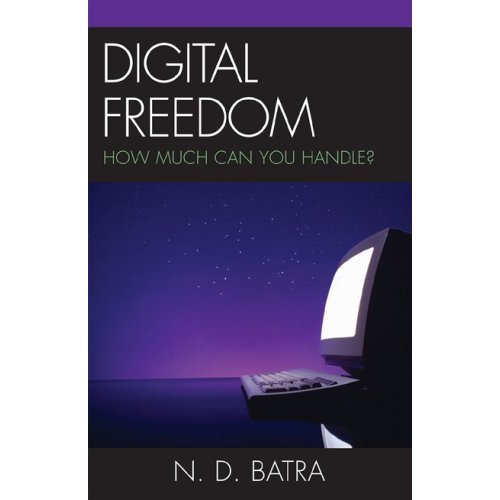
The writer, the author of Digital Freedom, is professor of
communication and diplomacy
at Norwich University

Wednesday, December 01, 2010

Bojhapara: Tagore

Bojhapara

(Understanding) from the book ‘Kshanika’ (Momentary) written in 1910
By Rabindranath Tagore


[Translator’s note: Tagore wrote this poem when he was only 38 years old, hardly half-way through his life. The Poet’s life was replete with tragedies including death of his children and his wife who died in 1910, the year when this poem was written. But he had absorbed all these shocks calmly. Remarkable is the great maturity in the Poet’s philosophy of life even when he was just middle aged. But this should not surprise one knowing that thanks to his father’s [Maharshi Debendranath Thakur (‘Maharshi’ is the appellation for a sage-like person)] guidance Tagore’s thoughts were deep-rooted in Vedas and Upanishads (nearly 5000 year old Indian scriptures) since his boyhood which was transmitted to the different phases of his life until his death.]
Translator: RAJAT DAS GUPTA (Kolkata) [dasguptarajat@hotmail.com
& rajatdasgupta@yahoo.com


Tell your mind to-day,
Benign or evil, come what may,
Take truth easy all your way.

Some love you, some can’t
Some revere much
Some are not such
And thus you’ll be shunt.
That’s their wont and yours too
Which settles our mundane due.

Some will bilk you
So you’ll in lieu;
Something you’ll share
Others to bare;
For ages it runs as at start
Are you that lucky to escape all hurt?

Tell your mind to-day,
Benign or evil, come what may,
Take truth easy all your way.

Past many a storm, you purport,
Reached the Utopian port;
The deceptive underwater rock
Served you severe shock.
Instantly your ribs feeble
Shook up in wail terrible;
For that, should you have vitriol
With all?

If you can still float
Of course you’ll gloat.
If you can’t, just drown
Without a frown.
Nothing unprecedented is this,
Precious trifle the event is.
Where none raises eyebrow
There hits the prow
To wreck the ship
Turning it to a heap.

Tell your mind to-day,
Benign or evil, come what may,
Take truth easy all your way.

Not everybody measures like you
Nor the vice versa is true.
At stress of somebody you ail
And at yours one’s breathes fail.
Yet, just ponder,
Why this tug-of-war?
If you stretch your hand in earnest
That may get you euphoric best.
The sky remains blue, the dawn endearing,
If death is imminent, in your mind will ring-
“Life is preferred to death,
Whatever that may bequeath.
Loss of the precious, which mourned I
Flooding my eye,
Even sans that I feel,
The world is uphill.

Tell your mind to-day,
Benign or evil, come what may,
Take truth easy all your way.

As down the horizon you go,
If you elongate your shadow
To darken your life by default
On strife with your fate without a halt,
You only self-axe your toe,
But better do it soonest, if it must be so.
Lamenting a lot,
Filling jars of tears pretty hot
Do reach an understanding with your mind –
A light to find
As the lamp you’ll lit
In your room the dark to defeat,
Just forget O brother
How much your dues with others’ differ.

So, tell your mind to-day,
Benign or evil, come what may,
Take truth easy all your way.

* * * * * * * * * * * * * * * * * *

Monday, August 09, 2010

Open up India

Printed from
TOP ARTICLE
Open Markets, Open Minds

N D Batra
Aug 10, 2010, 12.00am IST
Times of India

Every year, India waits for a bountiful monsoon not only to cool people from the sweltering heat but, more importantly, to chill food prices so that the common man can feed his children healthy meals. A good monsoon can make a difference of 7 to 10 per cent in food prices and that means a lot to a middle-class Indian family with school-going children or a day labourer working on a construction site. Last year's bad monsoon spiked food inflation by double digits this year.

But since India cannot always depend upon the generosity of the rain gods, it can certainly use the efficiencies of organised retailers like Carrefour, Tesco, Walmart and others to bring down the prices of daily essentials including groceries. A few years ago, West Bengal chief minister Buddhadeb Bhattacharjee asked at a meeting of business leaders in Kolkata, "Why do we need Walmart to come?" The answer is simple: bringing down prices of daily essentials is good for every politician, regardless of ideology.

Food subsidies through rationing create a feeling of dependence and hurt the poor's self-respect. Moreover, as a recent discussion paper by the ministry of commerce and industry emphasised, "The bill on food subsidies is rising. In spite of such heavy subsidies, overall food-based inflation has been a matter of great concern. The absence of a 'farm-to-fork' retail supply system has led to the ultimate customers paying a premium for shortages and a charge for wastages."

Eliminating wastage through a modern cold storage and supply chain system that an organised retailer like Walmart can provide will bring down prices by 5 to 7 per cent. But the question is: will Walmart eat up the lunch of millions of entrepreneurs, middlemen and small shopkeepers? Very unlikely, for the simple reason that the retail space in India is growing at a very fast rate. According to the BMI India Retail Report for the third-quarter 2010, retail sales are likely to increase at the annual rate of 11.4 per cent for the retail industry to grow from $353 billion in 2010 to $543.2 billion by 2014. India is not a dog-eat-dog world. In a growing India, everyone can grow.

The world's biggest retail and grocery giant, Walmart, sells almost everything and at the lowest prices, providing low-income and middle-class people affordable access to goods which would be otherwise beyond their tight budgets. Small entrepreneurs are, of course, the backbone of the Indian economy but instead of being overly protected, they should be gradually exposed to the challenges of marketing innovations of Walmart, Carrefour and others. Entrepreneurs thrive best in an environment of challenge-and-response. In the process, some creative destruction as economist Joseph Schumpeter termed it is inevitable.

Due to the fact that incomes are rising and the middle and upper middle-class consumer is eager to use a credit card, retail opportunities in India are expanding rapidly even in second and third-tier cities, according to the BMI report. Even if India's huge retail market grows modestly, let's say at the same rate as India's GDP (8-9 per cent), modern retailing practices must be built up to satisfy the demand of the growing populace. The government allows 51 per cent foreign direct investment to companies that sell goods through single-brand stores. Through its Bharti franchise, Walmart, for example, found a narrow passage to India but time has come to open India's doors more widely and let the competition begin so that even the poorest can benefit from its "always low prices". Open markets create open minds.

India is not only a huge growth market for Walmart, but it is also a fast-growing outsourcing market, with an expected $1.6 billion merchandise export to Walmart International this year. But that is puny compared with what Walmart buys from China $28 billion according to some estimates and, besides, it has created many entrepreneurial opportunities in China by establishing a most modern supply chain system.

Policymakers should focus their attention on not only how Walmart will trigger a retail revolution in India but also whether India could become another outsourcing hub for the hungry global giant which has 4,008 stores worldwide, including 66 in China. The retailer is able to achieve efficiencies by buying massive quantities from inshore and offshore sources. It helps farmers to provide better produce to meet its international standards, as it is doing in Punjab.

Walmart hires workers at competitive wages, though some say at the lower end, especially women employees (a sex discrimination class-action lawsuit has been allowed to proceed against the retailer in the US). Discrimination is an unacceptable practice in American society and that's how it should be in India, whenever a foreign company is allowed to do business. Just and fair labour practices established in the US should be followed when the government allows Walmart and other multinationals full entry into India. Low prices, non-discrimination, technology transfer, if that's Walmart, Carrefour or Tesco, welcome to India.

The writer is professor of communications and diplomacy at Norwich University, US.

Read more: Open Markets, Open Minds - Edit Page - Opinion - Home - The Times of India http://timesofindia.indiatimes.com/articleshow/6282594.cms?prtpage=1#ixzz0w8ogY7ka

Thursday, June 10, 2010

Lure Of Social Networking

Lure Of Social Networking
N D Batra
THE TIMES OF INDIA
11 June 2010

In the United States and Canada, recruiters invariably do Google search on their prospective candidates and trawl social networking sites such as Facebook, MySpace and LinkedIn to cross-check before they hire anyone. With millions of young people eager to share their spur-of-the-moment opinions, risque photos and outrageous experiences with others including strangers, the danger of compromising one's digital identity, privacy and social reputation and, consequently career prospects, is tremendous.

In a free-floating social network environment, users unfortunately forget that the delete key provides a deceptive and illusory function because someone might have already accessed the information and passed it on to others. Once information goes viral, we cannot recall it a curse of the digital age as many American politicians have been discovering. Or maybe it is a public blessing because now no politician can hide from us. Since the internet has taken up the centre stage in our lives, opting out of it is not an option. Our digital past cannot be undone and can haunt us.

According to a recent report from Pew Internet & American Life Project, 46 per cent online adults in the US have uploaded their profiles in virtual networks, which they keep monitoring and updating. And a majority of adult Americans use search engines to find information about themselves no, it's not digital narcissism but a modern-day necessity because maintaining one's reputation and privacy has become difficult in the age of social networks. How ironic that you have to keep checking yourself online to know who you are!

More than older people, it is the younger generations, the 18-29 career-making age group, according to the report, that are keen to limit their personal information available online; they change their private settings, delete unwanted comments and remove their names from any photos tagged to identify them. There is a growing distrust of social networking sites, in spite of the fact that their use is increasing everyday. Since most cameras now come with instant YouTubing capabilities, one gets paranoid seeing a person clicking in public places.

The Pew Centre reported that nowadays most Americans do thorough online search about an expert whose professional services they seek. And this is certainly true about doctors, surgeons and financial experts, people so important to us today. Dating partners do online research about each other before they get into deeper waters. Even neighbours do digital social network snooping on neighbours.

A few days ago a Facebook friend of a friend in India posted a dreadful hate cartoon about a most revered prophet, which i had to delete promptly, not out of fear but out of sheer disgust. Earlier, someone had posted on my Wall a picture of an armed Maoist group, mostly gun-slinging women with children, which drew lot of comments from the friendly strangers on my Facebook. India's Facebook population at about eight million is tiny in comparison with 112 million in the US, but it is growing at a double-digit rate. And the potential is immense, especially when Indian cellphone users, 500 million and growing, the second largest after China, leapfrog fixed-line internet connections and begin to use mobile Web for social networking via the cellphone. It's hard to say how much openness Indians can stand once the country becomes one giant digital fish bowl but the lure of social networking is irresistible.

Today, a man is known by the company he avoids rather than that which he keeps, but in the digital age barriers are so low that sometimes it is difficult to know who is entering your cyberspace. Friends recommend friends and, sooner than you realise, you have a hyperactive communal space where everyone is buzzing and posting something: from a new mom about how her lovely one-year-old warrior is growing so fast, to the most recent conspiracy theory about the railway accident that was engineered to malign the good woman of Kolkata, the redoubtable Mamata Banerjee.

I had to reset my Facebook privacy settings to restrict entrance but i am still not sure how secure the firewall is. Facebook voraciously collects personal information which it utilises for profiling users to enable advertisers to target them more productively. Facebook makes money out of our digital footprints. Under severe public protests, Facebook promised better privacy protection but few trust the network. Nonetheless, its 450 million users worldwide keep socialising perhaps because the benefits of serendipity outweigh the risks.

Online serendipity indeed can be a blessing. For example, sometime ago a Kolkata writer friend, a translator of Tagore's poems and songs, sent me a piece which i published on my website more like a message in a bottle than for distribution. But to my great delight the piece was picked up by the Bulletin of the Ramakrishna Mission Institute of Culture, as part of the 150th anniversary celebration of the poet's birthday. Nothing is lost once it is in cyberspace and an obscure piece in a blog or social network can reach a universal audience.

The writer teaches communications and diplomacy at Norwich University, US.

Copyright ND Batra 2010